










Understand your treatment
Your guide to Fat Freezing
Explore the evidence, the limitations and the questions to discuss at your consultation.
Updated
How it works
Fat cells are more sensitive to cold than the skin and muscle around them. The applicator draws the area into its cup with gentle suction and holds it at a controlled low temperature, which damages fat cells while the skin is protected. Over the following weeks your body clears the damaged cells naturally, so the change is gradual rather than instant. [3]
Our Cryo 360° applicators cool the tissue all the way round the cup rather than from one or two flat plates, to give even coverage of the area inside it. CoolSculpting is one brand of cryolipolysis device; Cryo 360° is a different system that works on the same principle. [2]
Is this treatment right for me?
Fat freezing works best on a soft, pinchable bulge of fat that has not shifted with diet and exercise, in someone close to a stable weight. It removes fat, not skin, so it is not the right choice if the main concern is loose skin or poor skin tone. [2]
Who should not have it
You should not have fat freezing if you have a cold-sensitivity condition:
- Raynaud’s disease, chilblains (pernio) or cold urticaria
- cryoglobulinaemia, paroxysmal cold haemoglobinuria or cold agglutinin disease
- poor circulation in the area to be treated
It should not be done on or near a hernia or a structurally weak area, such as a surgical scar or abdominal muscle separation after pregnancy. [1] Tell us about any medicines, skin conditions or recent surgery, and if you are pregnant or breastfeeding.
What to expect before, during and after
Before treatment
No special preparation is needed: wear comfortable clothes and eat and drink as normal. At the start of your appointment your practitioner looks at the area, confirms how many applicators it needs and marks where they will go. [2]
During your appointment
A protective gel pad goes on the skin, then the applicator draws the area into its cup. You will feel strong pulling and intense cold for the first few minutes, which fades as the area goes numb. Most people read or use their phone while it runs. Allow at least 30 minutes, and longer if you are having several applicators. No anaesthetic is needed. [2]
After treatment
The area can look red and swollen and feel firm, sore or bruised for a few days. Numbness and tingling are common and can last several weeks. You can go back to work and normal activity straight away. [1] [4] Contact us if you have severe pain or blistering, or if the treated area grows rather than shrinks in the months that follow.
Results and the evidence
Studies measure the change in the treated fat layer. A 2015 review of 19 studies found average reductions of about 10% to 25% on ultrasound, [3] and the American Society of Plastic Surgeons puts the average at around 20% of the treated bulge. [2] A 2025 analysis of 30 studies (3,158 people) found that abdominal circumference was on average 3.6 cm smaller 12 weeks after treatment, and 80% of people were satisfied. [4] That is a visible change in shape for many people, not a drop in weight.
When you will see a difference
The first changes usually show from about four weeks. Most of the change is visible by around three months, and it can keep developing for up to six months. [2] Some people choose a second session on the same area after that point.
How long results last
The fat cells that are destroyed do not come back. The fat cells that remain can still grow, so the result lasts as long as your weight stays broadly stable.
Every figure here is an average across studies; some people see more change and some see less.
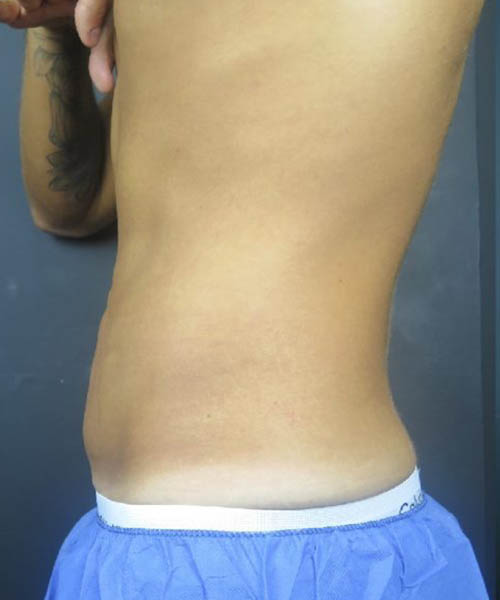
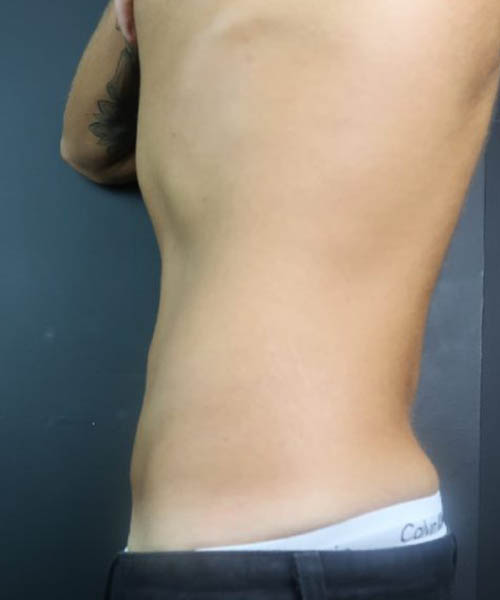
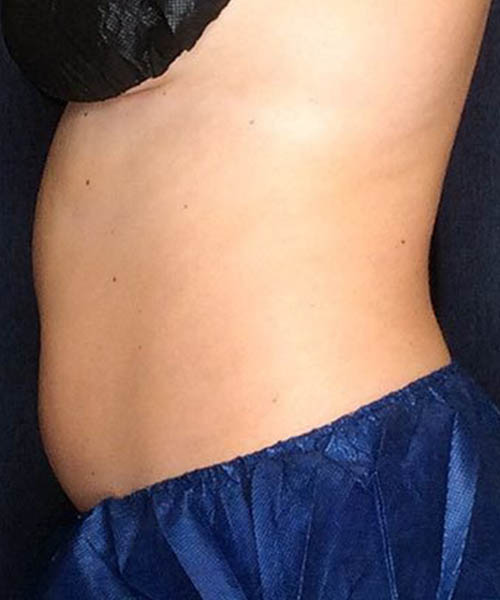
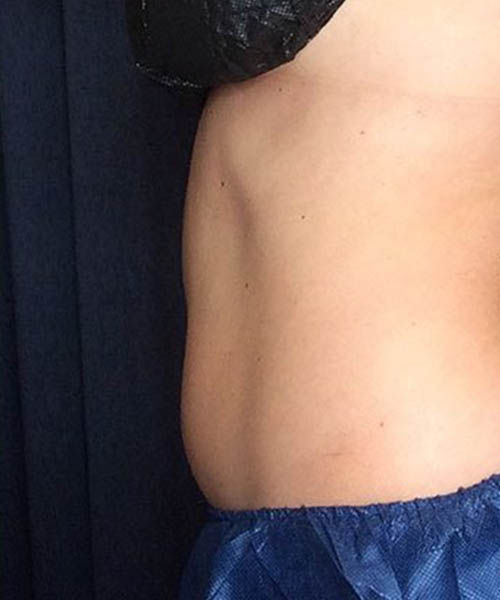
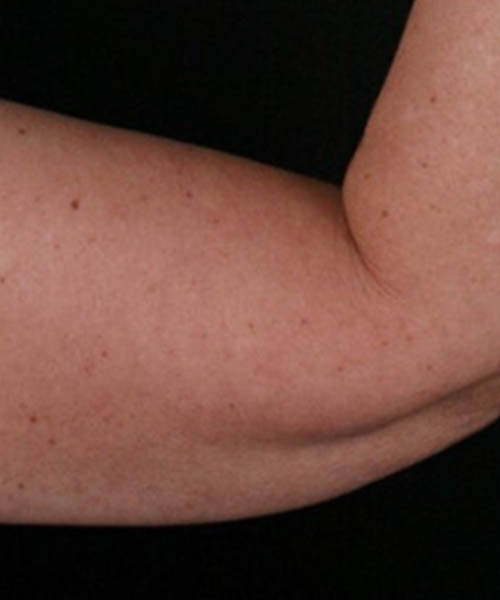
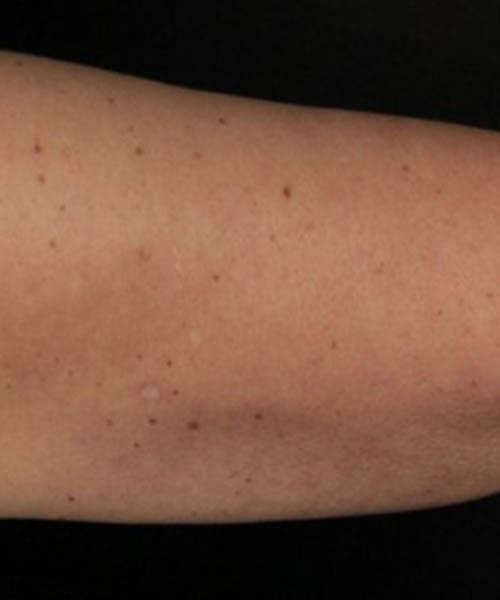
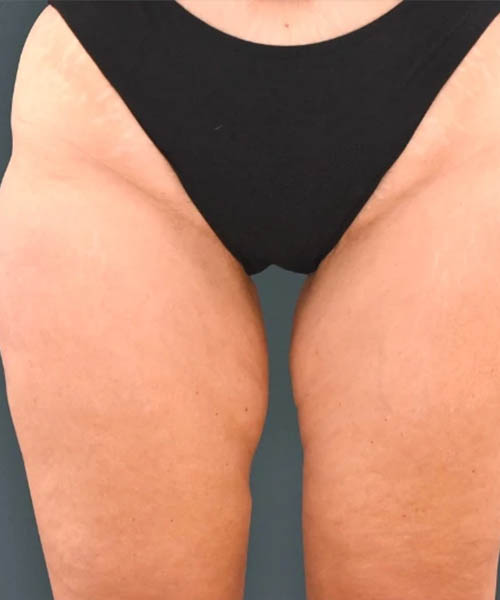
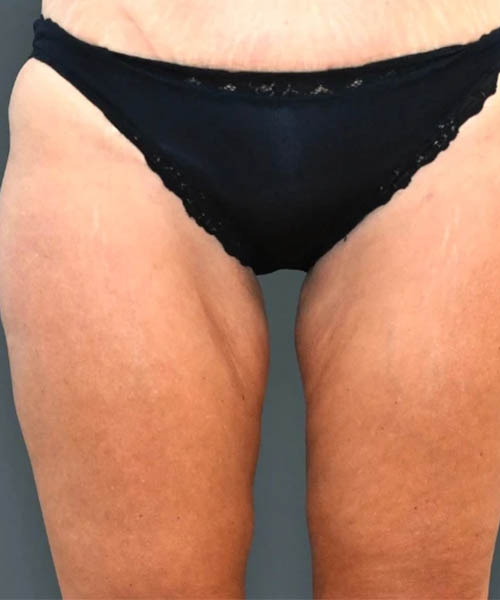
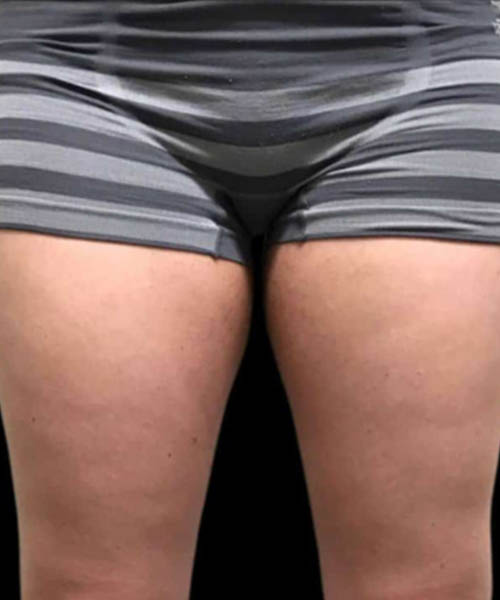
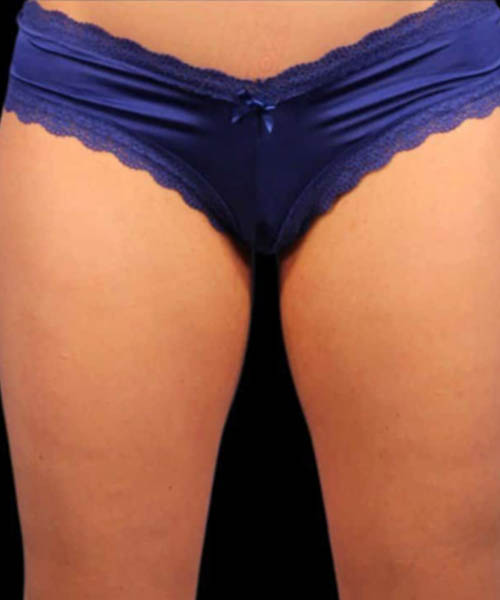
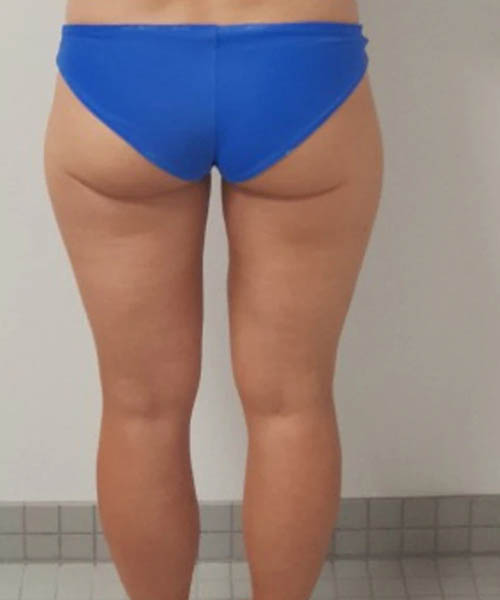
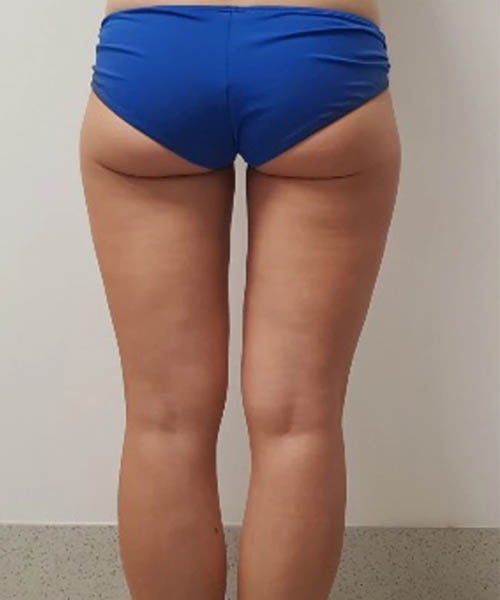
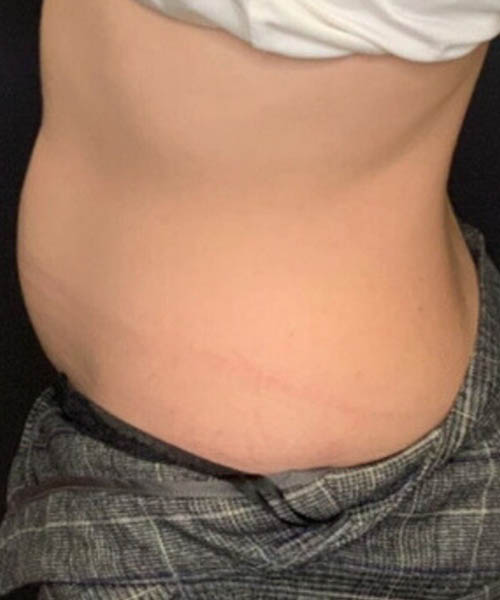
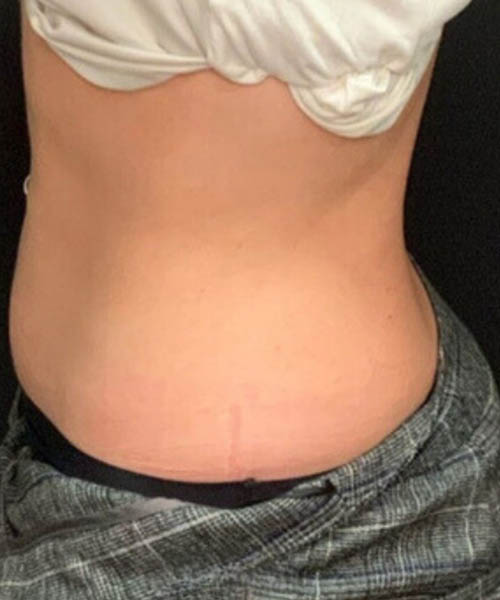
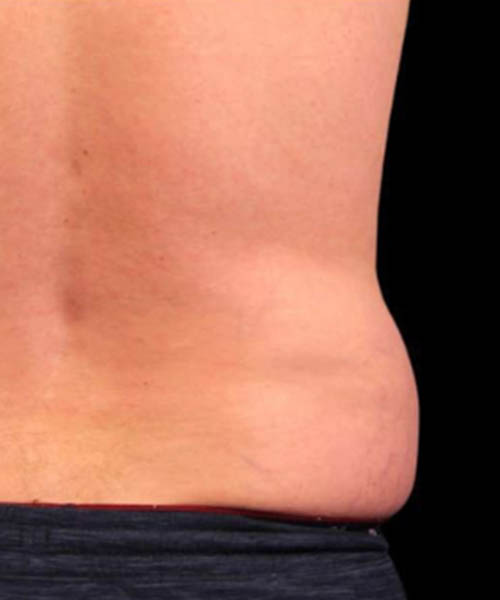
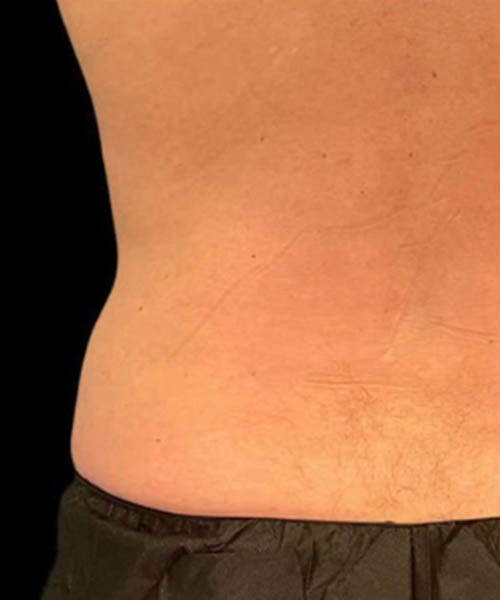
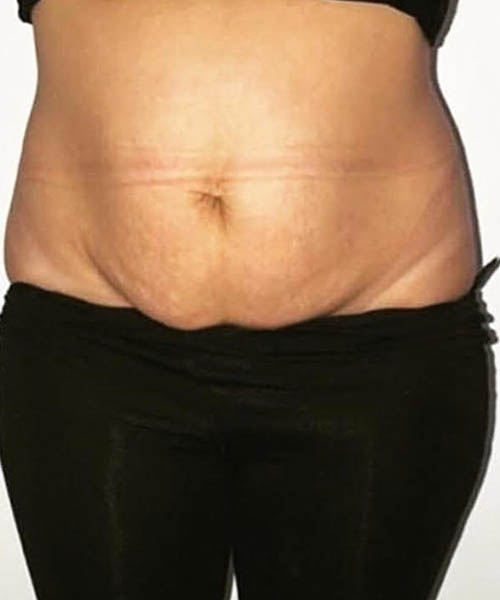
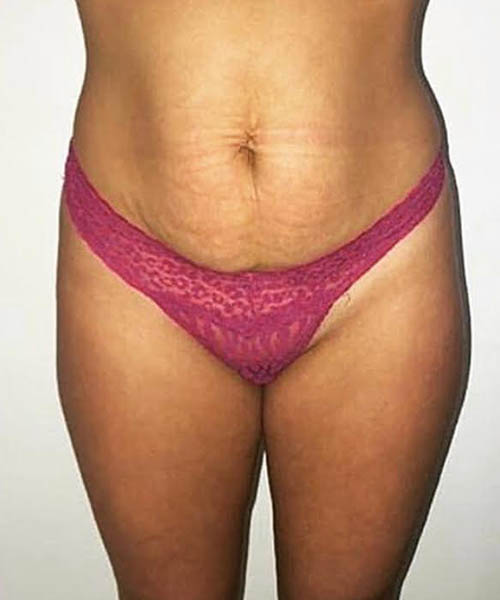
Individual results vary. Photographs illustrate particular cases and cannot predict your outcome.
Part of an informed decision
Risks and side effects
Common short-term effects
Numbness affects about half of people, and redness, swelling, pain and tingling are common. These usually settle without treatment, though numbness can last several weeks.
Less common effects
Firm lumps (nodules), skin discolouration and freeze burns, which can be severe. Under the chin, nerve effects can temporarily change the position of the lip or tongue, and some people feel a temporary fullness at the back of the throat. Hernias in the treated area have been reported.
Sources: US Food and Drug Administration
Paradoxical adipose hyperplasia (PAH)
The treated fat grows instead of shrinking, usually showing two to five months after treatment. A 2025 review of 28 studies estimated it affects about 1 in 455 people, higher than manufacturers have reported, and it is more common in men. It does not go away on its own and may need surgery.
Sources: Aesthetic Surgery Journal Open ForumUS Food and Drug AdministrationAmerican Society of Plastic Surgeons
Uneven or smaller-than-hoped results
Surface irregularities and asymmetry can occur, and some people see less change than they hoped for.
Sources: American Society of Plastic Surgeons
Frequently asked questions
Will fat freezing make me lose weight?
No. It reduces a specific bulge of fat by around a fifth on average. It does not treat obesity and will not change your weight. [1]
Does fat freezing hurt?
Most people feel strong pulling and intense cold for the first few minutes, which fades as the area goes numb. Afterwards the area can feel sore, like after a workout, for a few days. [2]
How many sessions will I need?
One session per area is often enough. Some people choose a second session on the same area once the first result has developed, usually after three months.
Are the results permanent?
The fat cells that are destroyed do not come back, but the remaining fat cells can grow if you gain weight. Results last as long as your weight stays broadly stable.
Is fat freezing the same as CoolSculpting?
CoolSculpting is one brand of cryolipolysis device. We use Cryo 360° applicators, a different system that works on the same principle. [2]
What is PAH and how likely is it?
Paradoxical adipose hyperplasia is a rare complication in which the treated fat grows instead of shrinking. A 2025 review estimated it affects about 1 in 455 people. It does not go away on its own and may need surgery, so contact us if a treated area gets bigger in the months after treatment. [5]
Find a clinic
Find your local clinic for location details and booking options.
- Fat Freezing Belfast →
- Fat Freezing Birmingham →
- Fat Freezing Bristol →
- Fat Freezing Cardiff →
- Fat Freezing Dubai →
- Fat Freezing Glasgow →
- Fat Freezing Leeds →
- Fat Freezing Liverpool →
- Fat Freezing London →
- Fat Freezing Manchester →
- Fat Freezing Mumbai →
- Fat Freezing Newcastle Upon Tyne →
- Fat Freezing Nottingham →
- Fat Freezing Sheffield →
Further reading
- Fat Freezing Results: What to Expect Week by Week
- Fat Freezing (Cryolipolysis) Side Effects, Safety, and Aftercare
- Fat Freezing Cost UK: Comprehensive Guide to Pricing & What Affects Cost
- Am I a Good Candidate for Fat Freezing? BMI & Body Type Guide
- Fat Freezing vs Liposuction: Cost, Recovery and Results
Sources and evidence
Research findings describe particular devices and study populations; they are not a promise of an individual result.
- Non-Invasive Body Contouring TechnologiesUS Food and Drug Administration
- Cryolipolysis: nonsurgical fat reductionAmerican Society of Plastic Surgeons
- Cryolipolysis for Fat Reduction and Body Contouring: Safety and Efficacy of Current Treatment ParadigmsPlastic and Reconstructive Surgery · 2015
- Cryolipolysis and associated health outcomes, adverse events, and satisfaction: A systematic review and meta-analysisObesity Reviews · 2025
- Incidence of Paradoxical Adipose Hyperplasia After Cryolipolysis: A Systematic Review and Meta-AnalysisAesthetic Surgery Journal Open Forum · 2025