
Setting Honest Expectations Before Your HIFU Session
If you have been researching a non-surgical facelift, you have probably seen HIFU described as everything from a relaxing “lunchtime” treatment to something that brings people to tears. Neither extreme tells the full story. High-intensity focused ultrasound (HIFU) does produce real, noticeable sensations, but for most people they are brief, manageable, and over within fractions of a second per pulse.
The honest answer is that HIFU is usually best described as uncomfortable rather than excruciating. Clinical studies consistently place average pain scores during facial HIFU at around four out of ten on a visual analogue scale, firmly in the mild-to-moderate range, with no participants in some trials reporting severe pain at all. That said, certain passes over thin, bony areas can deliver sharper, deeper sensations that catch first-timers by surprise.
This guide explains exactly why HIFU feels the way it does, which areas tend to feel most intense, how the experience differs across the face and body, and what is normal versus what should prompt a conversation with your practitioner. The aim is to neither downplay nor dramatise, but to help you walk into your appointment knowing precisely what to expect.

Why HIFU Produces the Sensations It Does
HIFU works rather like focusing sunlight through a magnifying glass. The ultrasound beam is harmless along most of its path but becomes intense at a precise focal point beneath the skin, where temperatures rise into the range that triggers controlled collagen contraction and a natural wound-healing response. This is what ultimately produces the gradual tightening and lifting effect over the following weeks.
Because the energy is deposited so quickly and so precisely, your body registers it through several different sensory systems at once. Thermoreceptors detect the rapid rise in temperature, producing that distinctive feeling of deep, focused warmth. As temperatures climb towards the threshold for collagen remodelling, heat-sensitive nerve fibres are briefly recruited, which is what creates the sharp, stinging quality some people describe. At the same time, the mechanical pulse of each shot stimulates pressure receptors, felt as tapping, pressure, or the famous “zing.”
Crucially, all of this happens beneath the surface. The epidermis is left visually intact, which is why HIFU does not cause the raw, peeling skin associated with ablative lasers. Research into focused ultrasound and the nervous system has shown that the same technology can be tuned to produce gentle tactile sensations, warmth, or sharper signals depending on its settings, which explains the wide range of experiences people report.
What a Facial HIFU Treatment Actually Feels Like
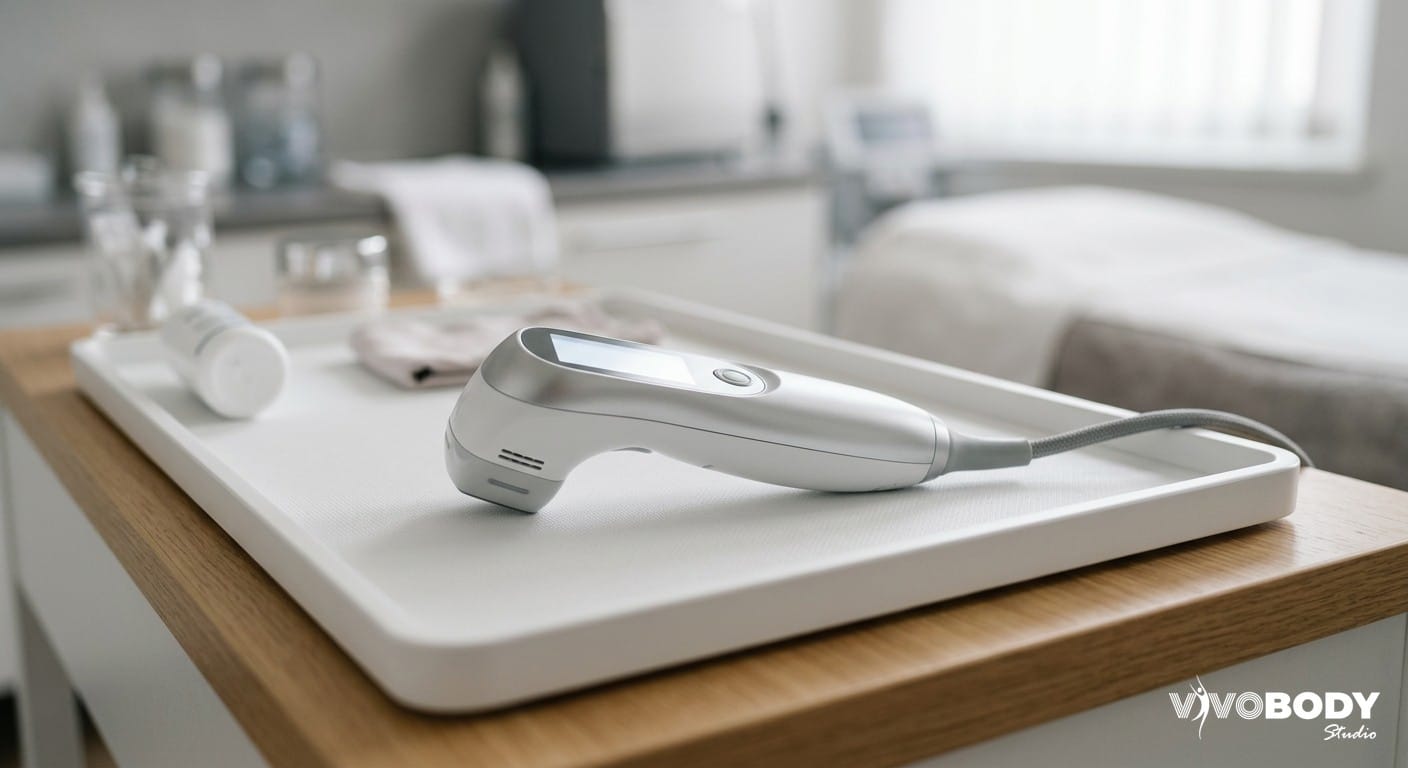
After your skin is cleansed and ultrasound gel is applied, the practitioner moves a hand-held applicator systematically across the treatment area, delivering short bursts of energy along planned lines. Each individual shot lasts less than a second.
During each pulse, most people feel a wave of deep warmth that builds and fades quickly, often accompanied by a brief prickling or zapping sensation. Many describe it as a tiny electric shock or the snap of a rubber band felt beneath the skin rather than on its surface, reflecting the subdermal target of the energy. When the deeper supportive layer is treated, you may notice involuntary muscle flickering or a slight twitch. Far from being a problem, this is usually a sign that the energy is reaching the correct depth.
One of the most reassuring features of HIFU is that the discomfort is not continuous. Sensations come and go with each pulse, and between shots you feel nothing at rest. This rhythm allows your practitioner to pace the treatment, pause when needed, and adjust the energy based on your feedback. Many people leave remarking that it was “not as bad as expected.”
Which Areas Tend to Feel Most Intense?
Sensation varies considerably across the face, and the pattern is predictable. The forehead is often the most sensitive region, because the skin is thin, sits directly over bone, and is crossed by sensory nerves. The jawline and under-chin area can also feel more intense during the deeper passes, where you may perceive a firm pressure or a dull “bone ache.”
By contrast, the cheeks and the area around the eyes tend to be far more comfortable, thanks to thicker, more cushioned tissue and lower energy settings. Some people even describe these passes as a warm, pulsating massage. As a general rule, areas with plenty of soft tissue are gentler, while thin, bony, or nerve-dense regions are where you are most likely to notice the sharper sensations.
HIFU should feel manageable rather than something you must endure stoically. If discomfort feels wrong rather than simply strong, that is exactly when to speak up.
The First Few Days: What to Expect Afterwards
Because HIFU leaves the surface of the skin intact, you will not see raw or peeling skin afterwards. Beneath that intact surface, however, thousands of tiny treatment points are quietly triggering a healing response, and you may feel this in the days that follow.
Mild redness or flushing immediately after a session is common and usually settles within a few hours to a day. Some people notice slight puffiness or a feeling of fullness, which typically subsides within several days. The most frequently reported after-effect is tenderness to the touch, rather like the soreness you might feel after a deep-tissue massage or a hard workout. A dull ache along the jawline or under the chin when chewing or pressing on the area is normal and generally eases within 24 to 72 hours.
Occasionally, people experience temporary patches of numbness or altered sensation, particularly around delicate structures such as the lips or eyes. While these can feel disconcerting, they reflect minor, temporary irritation of superficial sensory nerves and almost always resolve on their own within a few weeks. Studies following patients for many months afterwards consistently report no long-term sensory problems in the vast majority of cases.
Many people also notice an early feeling of tightness or “support” in the treated skin within the first week. This reflects immediate tissue contraction rather than the full result, which develops gradually over two to three months as new collagen forms. You can read more about the timeline in our guide to how long HIFU results take to appear and how long they last.
HIFU Sensation: An Honest Balance
What Reassures Most People
- Each pulse lasts less than a second, and you feel nothing between shots
- Average pain scores sit in the mild-to-moderate range in clinical studies
- No incisions, no broken skin, and minimal visible downtime
- Energy and pacing can be adjusted in real time to your comfort
- Most after-effects are limited to a few days of mild tenderness
What to Be Prepared For
- Certain deep passes over thin, bony areas can feel sharp and intense
- The forehead, jawline and under-chin are typically the most sensitive zones
- Discomfort can rarely be eliminated entirely without reducing effectiveness
- Mild soreness and occasional transient numbness can last a few days to weeks
- First-timers often report more discomfort due to anticipation and unfamiliarity
How Body HIFU Differs From Facial Treatments
When HIFU is used to target deeper fat for body contouring on areas such as the abdomen, flanks, or thighs, the sensation profile shifts slightly. Here the energy works on a larger volume of tissue, so people tend to describe a deeper, more diffuse heat and pressure, sometimes with sharper pricks where the focal point sits near firmer structures or bone.
Treatment is generally well tolerated but can feel more intense over bony prominences or in very lean individuals, where there is less cushioning between the focal zone and the underlying bone. Afterwards, a bruised, achy soreness and mild swelling are more noticeable than with facial HIFU, reflecting the greater volume of tissue involved. This usually peaks within the first few days and settles over one to two weeks.
One quirk worth knowing is that because the skin surface stays unbroken and redness is often minimal, people can underestimate how much is happening beneath and be surprised by the depth of the ache when they press on or lie against the treated area. Clear pre-treatment explanation helps these sensations feel expected rather than alarming. If body tightening is your goal, our HIFU facelift and body tightening page sets out the full picture.
What Shapes How Much You Feel
Your personal experience of HIFU is not dictated by physics alone. Several factors interact to determine how intense the sensations feel.
Device Quality and Technique
Newer micro-focused ultrasound devices, particularly those with real-time imaging, concentrate energy sharply at the target depth and avoid unnecessarily stimulating surface nerves. Many of the “horror stories” circulated online trace back to older, less precise machines, poorly calibrated equipment, or untrained operators using inappropriate settings. The skill of your practitioner in selecting the right depth, pacing the pulses, and applying gentle, even pressure makes an enormous difference to comfort.
Your Individual Anatomy
People with lean faces, prominent bone structure, and little subcutaneous fat tend to feel more, because the focal zone lies closer to bone and nerves with less cushioning. Those with thicker, more resilient skin often tolerate deeper passes with less discomfort. Predictable “hot spots” exist where sensory nerves run close to the surface, such as near the chin and forehead, and a skilled operator adjusts their technique around these areas.
Psychology and Expectations
Pain perception is powerfully shaped by anxiety, attention, and prior experience. First-time patients often report higher discomfort than those returning for maintenance, partly because unfamiliar sensations feel more alarming and anticipation heightens vigilance. Once you learn the rhythm and realise each shot is brief, many people relax and cope far more easily. This is why balanced, honest counselling beforehand, rather than promises of a “painless” treatment, is so important.
How Discomfort Is Managed
In cosmetic practice, HIFU is almost always carried out with you fully awake, which preserves the valuable feedback that helps your practitioner fine-tune the treatment. Comfort is managed through a combination of simple measures.
Topical numbing creams applied before the session can dull the sharpest surface stings, though because HIFU targets deeper layers, they cannot remove the sensation entirely. Many people tolerate facial HIFU comfortably with no numbing at all, particularly with modern devices. Over-the-counter pain relief such as paracetamol or ibuprofen taken beforehand can take the edge off general discomfort and post-treatment soreness, and is often recommended routinely for body contouring.
Technique matters just as much as medication. Adjusting energy to your personal tolerance, slowing the pace with brief pauses, using plenty of gel for smooth coupling, and clear communication all reduce perceived discomfort. Practitioners who count down pulses and describe what each area will feel like help you stay in control, which is itself known to lower pain. Afterwards, gentle skincare, sun protection, and avoiding harsh actives or intense heat for a few days support comfortable recovery.
If you are weighing HIFU against other approaches, you may find our comparison of HIFU versus Botox or our look at non-surgical facelift options that genuinely work helpful in deciding what suits you.
Knowing Normal Discomfort From a Warning Sign
Distinguishing expected discomfort from something that warrants attention is straightforward once you know the pattern. Normal HIFU sensation consists of brief, focal pulses of warmth or sharpness that are intense but transient and subside immediately between shots. Normal recovery means mild-to-moderate tenderness and tightness that peaks in the first few days and steadily improves, with redness and swelling settling within hours to a week.
The signals worth flagging are different in character. Pain that is severe, continuous rather than pulsing, or that worsens with each pass despite adjustments, or that produces a sense of intolerable burning, should prompt your practitioner to pause and reassess. After treatment, pain that increases rather than decreases, especially alongside blistering, ulceration, spreading redness, or persistent numbness and weakness, should lead to a prompt review. As a rule of thumb, normal soreness improves within three to five days, and deviation from that course matters more than the absolute intensity at any single moment.
The single most important takeaway is to speak up during treatment rather than “toughing it out.” Early feedback allows your practitioner to adjust and avoid problems entirely. Choosing the right candidate also matters, and our companion article on how HIFU compares with a plasma eye lift can help you judge whether ultrasound tightening is the right fit for your concerns.
Frequently Asked Questions
Is HIFU painful?
HIFU is usually best described as uncomfortable rather than painful. Clinical studies place average pain scores during facial HIFU at around four out of ten, in the mild-to-moderate range. You feel brief pulses of deep warmth and occasional sharp “zaps” that last only fractions of a second, with no discomfort at rest between shots. Sharper sensations are more likely over thin, bony areas, but most people tolerate the experience well, particularly with modern devices and good technique.
Which areas of the face hurt the most during HIFU?
The forehead is often the most sensitive area, because the skin is thin and sits directly over bone with little cushioning, and sensory nerves pass through the region. The jawline and under-chin can also feel more intense during deeper passes. The cheeks and the area around the eyes tend to be far more comfortable, thanks to thicker tissue and lower energy settings, and are sometimes described as a warm massage.
How long does the soreness last after HIFU?
Mild tenderness, tightness and a feeling of deep soreness are common in the first 24 to 72 hours, especially when pressing or moving the treated area. Most people feel substantially more comfortable by day three to five, with any residual tenderness resolving within one to two weeks. Redness and swelling usually fade within hours to a few days. Occasional numbness or altered sensation may linger a little longer, sometimes up to two to four weeks, but generally improves without any intervention.
Can the discomfort be completely eliminated?
In cosmetic HIFU, discomfort can almost always be reduced to a tolerable level but rarely eliminated entirely if the treatment is to remain effective. Numbing creams dull surface sensations but cannot block the deeper feeling of each pulse, and reducing the energy too far would compromise your results. Through careful adjustment of depth, energy, pacing and pain relief, most people reach a comfort level they find perfectly acceptable.
Does more pain mean better results?
No. There is no evidence that more pain predicts better outcomes. Once the energy reaches an adequate level to stimulate collagen, further increases in discomfort tend to reflect excessive surface heating or imprecise targeting rather than superior results. Modern devices with sharper focusing can deliver effective energy with less surface sensation, so you should never equate extreme pain with a better outcome, nor should a practitioner push energy beyond your comfort in pursuit of it.
Why does HIFU for prostate cancer or bone pain feel so different?
Medical HIFU for deeper targets such as the prostate, bone, or fibroids uses far greater energy and is performed under sedation, regional, or general anaesthesia. As a result, patients usually feel little or nothing during the procedure itself, with sensations afterwards relating to the treated organ rather than the thermal pulses familiar from aesthetic HIFU. This is why descriptions of “what HIFU feels like” differ so dramatically depending on the setting.
