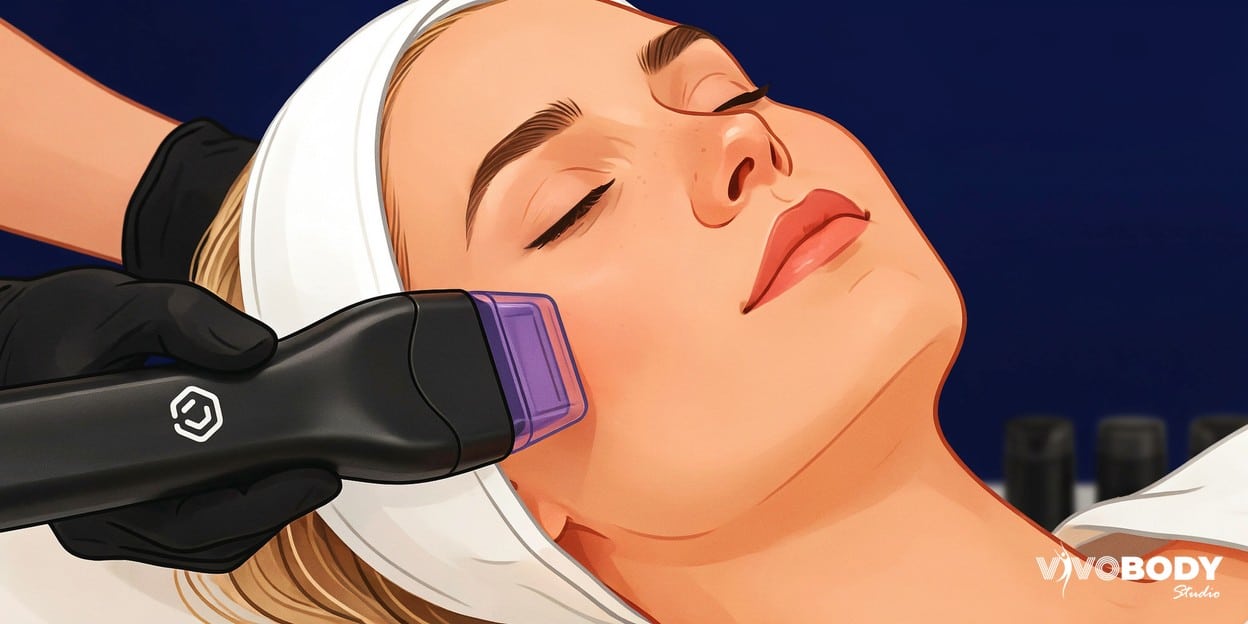
Understanding what Ultherapy actually is
If you have started researching ways to tighten and lift ageing skin, you have probably come across Ultherapy. It is heavily marketed as a premium, non-invasive lifting option, and it has a solid body of clinical evidence behind it. But here is something the advertising rarely makes clear: Ultherapy is a brand name, not a category of treatment. It is one particular device that uses microfocused ultrasound with visualisation (MFU-V), a refined form of high-intensity focused ultrasound (HIFU) technology.
In other words, the science that makes Ultherapy work is the same science that powers a number of other ultrasound-based skin-tightening treatments. That matters a great deal when you are weighing up your options, because it means you are not choosing between Ultherapy and something fundamentally inferior. You are often choosing between competing devices that share the same underlying mechanism, alongside genuinely different technologies such as radiofrequency, microneedling and lasers, each with its own strengths.
This article is a purchasing-decision guide rather than a technical deep-dive. If you want to understand the engineering differences between the two ultrasound systems specifically, our dedicated guide to HIFU results and longevity is a useful companion read. Here, our aim is simpler: to help you decide what to consider before you book.
How Ultherapy works and where it falls short
Ultherapy delivers focused ultrasound energy to precise depths beneath the skin, typically at 1.5mm, 3.0mm and 4.5mm. At these focal points it heats collagen-rich tissue to roughly 60-70°C, triggering immediate collagen contraction and a longer wound-healing response that builds new collagen over the following months. Its key distinguishing feature is the integrated imaging, which lets the practitioner see the tissue layers they are treating, including the deeper superficial musculoaponeurotic system (SMAS) that surgeons target during a facelift.
The published evidence is reasonably encouraging. A systematic review of microfocused ultrasound for skin tightening found consistent, if modest, improvements in lower-face and neck laxity, with results typically peaking between three and six months and lasting up to around 12 months, sometimes longer.
So why do so many people look at alternatives? Several reasons recur:
- The lifting effect is genuinely modest. It suits mild to moderate laxity, not heavy jowls, deep neck bands or significant skin redundancy after major weight loss.
- If your main concerns are texture, fine lines, acne scarring or pigmentation rather than sagging, ultrasound is not the most direct tool.
- Procedural discomfort has historically been a sticking point, with some people finding the energy delivery sharp, particularly over bone.
- The single-session premium price tag is high, and a one-device approach is not always the most cost-effective way to address a mixture of concerns.
None of this makes Ultherapy a poor treatment. It simply means it is one tool among several, and the right choice depends on you.

The ultrasound alternatives: same science, different packaging
Because Ultherapy is a branded HIFU-family device, the most direct alternatives are other ultrasound platforms that work on the same principle. A standard HIFU facelift delivers focused acoustic energy at predetermined depths to stimulate collagen remodelling and tighten the dermis and SMAS. Many clinics, including ours, offer this as a more accessible route to the same broad outcome. Our HIFU facelift and body tightening treatment targets the same areas Ultherapy is known for, including the brow, jawline and neck.
The honest truth is that the difference between a premium branded MFU-V device and a well-delivered HIFU treatment often comes down to the device’s imaging refinements, the practitioner’s skill and the price. The underlying biology, that controlled thermal injury prompts your body to lay down fresh collagen, is identical. For most people seeking subtle, natural-looking firming of mild to moderate laxity, a quality HIFU treatment delivers comparable benefits. If you would like to understand the longevity of these results, our overview of how long HIFU lasts sets realistic expectations.
It is also worth appreciating the lineage of this technology. Focused ultrasound was originally developed for neurosurgical applications long before it reached aesthetics, as our history of cosmetic HIFU explains.
Radiofrequency and microneedling alternatives
If you would rather move away from ultrasound altogether, radiofrequency (RF) is the most established alternative. RF devices heat the dermis using electrical resistance to around 40-50°C, prompting collagen denaturation and remodelling. The heating is broader and more diffuse than ultrasound’s focused points, and many people describe the sensation as a comfortable deep warmth rather than sharp zaps.
RF is colour-blind and safe across all skin types, much like ultrasound, and it excels at treating larger areas and softening fine lines. Our radiofrequency face lift is a good option for those who prioritise comfort and overall skin toning, while a radiofrequency body tightening treatment addresses laxity on the body.
For concerns that combine mild to moderate laxity with poor texture, scarring or enlarged pores, RF microneedling is often more impactful than ultrasound. It pairs fine needles with RF energy delivered into the dermis, stimulating robust collagen and elastin remodelling alongside surface improvement. Our Morpheus8 skin tightening treatment is a leading example, capable of meaningful tightening and contouring of the lower face and neck with only a day or two of redness. For gentler surface rejuvenation, traditional microneedling remains a dependable choice.
One important caveat: in 2025 the US Food and Drug Administration issued a safety communication highlighting risks of burns and unwanted fat loss when RF microneedling is performed with inappropriate settings or by undertrained operators. This is a strong reminder that practitioner expertise matters more than the device name on the brochure.
Is Ultherapy the right choice for you?
Ultherapy may suit you if
- You have mild to moderate laxity along the brow, jawline or neck
- You want a non-invasive lift with essentially no social downtime
- You value the precision of integrated ultrasound imaging
- You prefer a single annual or biennial session over a course of treatments
- You have darker skin and want a melanin-safe modality
An alternative may suit you better if
- Your main concerns are texture, fine lines, scarring or pigmentation rather than sagging
- You have significant jowling, heavy neck bands or loose skin after weight loss
- You are sensitive to procedural discomfort and would prefer gentler heat-based RF
- You want to address several concerns at once within a single package
- Budget is a priority and you are open to a course of more affordable sessions
Injectables, lasers and combination approaches
Skin tightening rarely exists in isolation. Many people asking about Ultherapy are really dealing with a mixture of laxity, volume loss and dynamic lines. In these cases, injectables often do more than any tightening device alone.
Botulinum toxin relaxes the muscles responsible for frown lines, crow’s feet and forehead creases, and a Cochrane review supports its efficacy for dynamic wrinkles. While it does not lift in the way ultrasound does, strategic placement can subtly elevate the brow. Our Botox anti-ageing injections are well suited where expression lines are the dominant concern.
If hollowing or deflation is the real issue, no tightening device can refill lost volume. This is where the conversation shifts towards restoration rather than tightening. Equally, if part of your concern is fullness rather than sagging, such as a heavy lower face or submental fullness, fat-reduction approaches may be relevant. Our fat-dissolving injections can target localised pockets that no amount of tightening will resolve.
The most sophisticated results usually come from layered, multimodal plans. An expert panel on whole-face rejuvenation set out exactly this kind of sequenced strategy, combining biostimulatory products, ultrasound lifting and neuromodulators to address different facial layers, with outcomes superior to any single treatment. For a broader perspective on building such a plan, our guide to non-surgical facelift options that really work is a helpful starting point.
The real question is rarely 'Ultherapy or something else?' It is 'where, if at all, does a tightening device fit into my overall plan?'
How VIVO approaches skin tightening differently
One of the practical drawbacks of branded single-device treatments is that they push you towards one technology regardless of whether it best fits your concerns. We take a different view. Because we offer the full spectrum of tightening modalities under one roof, from HIFU and radiofrequency to Morpheus8 and microneedling, your consultation can start with your face and your goals rather than with a device we are trying to sell.
This matters on three fronts in particular:
Price and value
Premium branded ultrasound treatments can run from £1,000 to several thousand pounds per session. By delivering HIFU and RF directly, we make the same underlying collagen-stimulating science considerably more accessible, without compromising on clinical standards.
Multi-area packages
Few people have a concern in only one zone. Rather than charging a separate premium for every area, we can structure multi-area packages that address the brow, jawline, neck and décolletage together, or combine a tightening treatment with complementary modalities such as microneedling for a more complete result.
Clinic locations
With clinics across the UK, ongoing maintenance, which all non-surgical tightening requires, is genuinely convenient. Because results evolve over months and fade gradually, having a local clinic for periodic top-ups makes it far easier to protect your investment over the long term.

The questions to answer before you book
Whichever direction you lean, working through a few core questions with a qualified clinician will steer you well.
What is your predominant concern?
Laxity points towards ultrasound, RF or RF microneedling. Texture, scarring and pigmentation point towards microneedling, lasers or resurfacing. Volume loss points towards restorative approaches, and fullness towards fat reduction. Most people have a blend, which is why combinations are common.
Where are you on the ageing spectrum?
Non-surgical tightening works best for mild to moderate laxity, typically from the late thirties through to the early sixties. Beyond a certain degree of skin redundancy, surgery becomes the more honest and cost-effective answer, and a good clinician will tell you so.
What is your skin type?
Ultrasound and RF do not target melanin, making them safe across all Fitzpatrick types. Some lasers carry a higher risk of pigmentary change in darker skin and require an experienced hand and appropriate settings.
What are your comfort, downtime and budget realities?
Be honest about your pain tolerance, how much visible recovery you can accommodate, and what you can sustain financially over five to ten years. A cheaper single session is not always cheaper over time, and a course of comfortable treatments may suit your life better than one intense one.
The bottom line
Ultherapy is a capable, well-evidenced device, but it is exactly that: one branded device using HIFU technology. Several effective alternatives, including standard HIFU, radiofrequency and RF microneedling, rest on the same fundamental science of collagen stimulation, and some address concerns that ultrasound cannot. The smartest decision is not driven by a brand name but by a clear understanding of your own skin, your goals and your budget.
Before you book anything, arrange a consultation with a clinic that offers more than one tightening modality and is willing to recommend the right tool rather than the only tool it sells. That honest assessment, grounded in your anatomy rather than a marketing campaign, is the single most valuable step you can take.
Frequently Asked Questions
Is Ultherapy better than standard HIFU?
Both use the same underlying high-intensity focused ultrasound science to stimulate collagen. Ultherapy is a branded MFU-V device with integrated imaging and a particularly strong evidence base, but a well-delivered HIFU treatment produces comparable firming for mild to moderate laxity, usually at a more accessible price. The practitioner’s skill is often more decisive than the brand name.
Can non-surgical tightening replace a facelift?
No. Ultherapy and its alternatives can produce meaningful, natural-looking improvement in mild to moderate laxity, but they cannot match the degree or durability of correction a surgical facelift achieves for heavy jowls, deep neck bands or significant excess skin. For advanced ageing, surgery remains the gold standard.
Which alternative is best if my main issue is texture rather than sagging?
If fine lines, scarring, enlarged pores or uneven texture bother you more than drooping, RF microneedling such as Morpheus8, or traditional microneedling, tends to outperform ultrasound. These work closer to the skin surface and remodel collagen where texture problems originate.
Is ultrasound safe for darker skin tones?
Yes. Both ultrasound and radiofrequency are considered colour-blind because they do not target melanin, making them suitable across all Fitzpatrick skin types when delivered at appropriate settings. Some lasers carry a higher risk of pigmentary change in darker skin and require an experienced practitioner.
How long do the results last?
Ultrasound tightening generally lasts around 12 months, sometimes up to two years. Radiofrequency may last two to three years with good skincare, and RF microneedling can maintain results for several years in favourable cases. All non-surgical tightening requires periodic maintenance, which is why convenient clinic access matters.
Will tightening treatments make my face look hollow?
Properly delivered ultrasound targets collagen-rich layers rather than fat, so consistent fat loss is not expected. Hollowing is a risk only when devices are misapplied or settings are inappropriate, which is why practitioner expertise is so important. If you already have facial deflation, combining gentle tightening with volume restoration usually gives a more balanced result.