Fat Freezing vs Liposuction: what is the difference?
If you are comparing fat freezing vs liposuction, you are probably asking a practical question rather than a cosmetic one: which option will remove stubborn fat most effectively with the least disruption to your life?
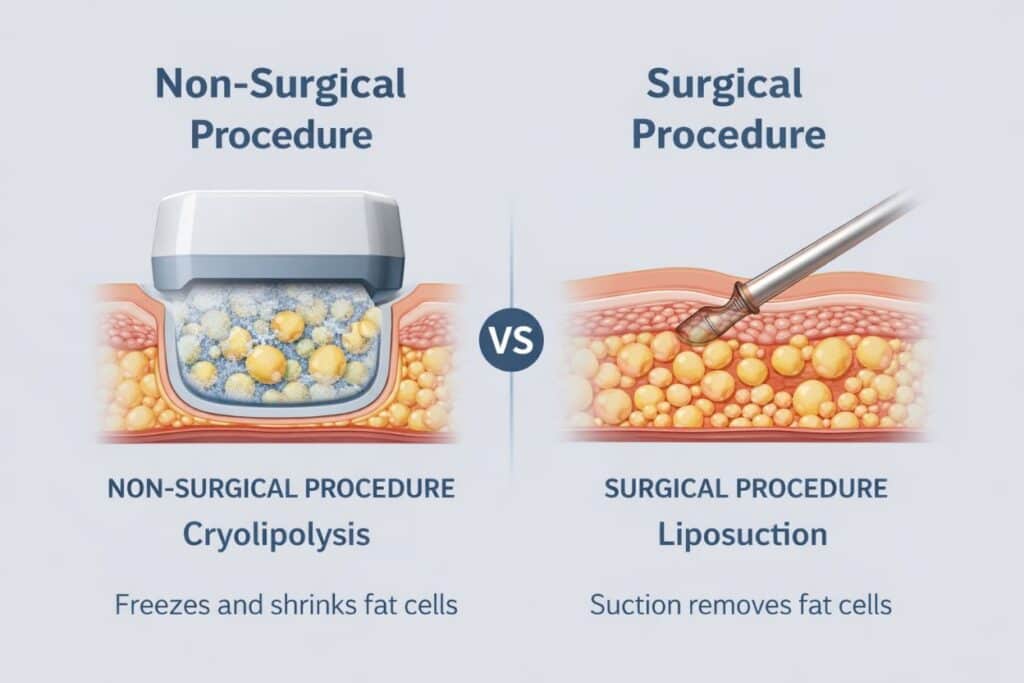
Both treatments are used for body contouring rather than weight loss. Both can lead to permanent fat cell removal in the treated area. However, they work in very different ways. Fat freezing is a non-surgical treatment that uses controlled cooling to target fat cells, while liposuction is a surgical procedure that removes fat more aggressively through suction.
For readers researching carefully, it is worth remembering that this is a health-related decision. A proper consultation with a qualified clinician or surgeon is essential, especially if you have underlying medical conditions, concerns about recovery, or expectations of major body shape change. The NHS also notes that cosmetic procedures require careful consideration of risks, benefits and aftercare before treatment.
At a glance, fat freezing may suit people who want a non-invasive option with no downtime, while liposuction may suit those seeking larger-volume removal and more immediate contour changes. Below, we compare them side by side.
| Feature | Fat Freezing | Liposuction |
|---|---|---|
| Cost | From £49 per applicator | Typically £2,500 to £6,000+ |
| Downtime | Zero downtime | Usually 2 to 6 weeks |
| Anaesthesia | None | Usually general anaesthesia or tumescent local anaesthesia, depending on the case |
| Results | Gradual reduction, often around 10 to 25% per treated area/session | More immediate and often more dramatic change |
| Best for | Small, localised fat pockets | Larger-volume fat removal and stronger contouring |
| Risks | Usually mild and temporary | Surgical risks including infection, contour irregularity and anaesthetic risks |
| Permanence | Permanent fat cell reduction if weight is maintained | Permanent fat cell removal if weight is maintained |
For those specifically exploring non-surgical body contouring, our guides on fat freezing treatment, how cryolipolysis works and alternatives to liposuction explain the wider context in more detail.

Cost comparison in the UK
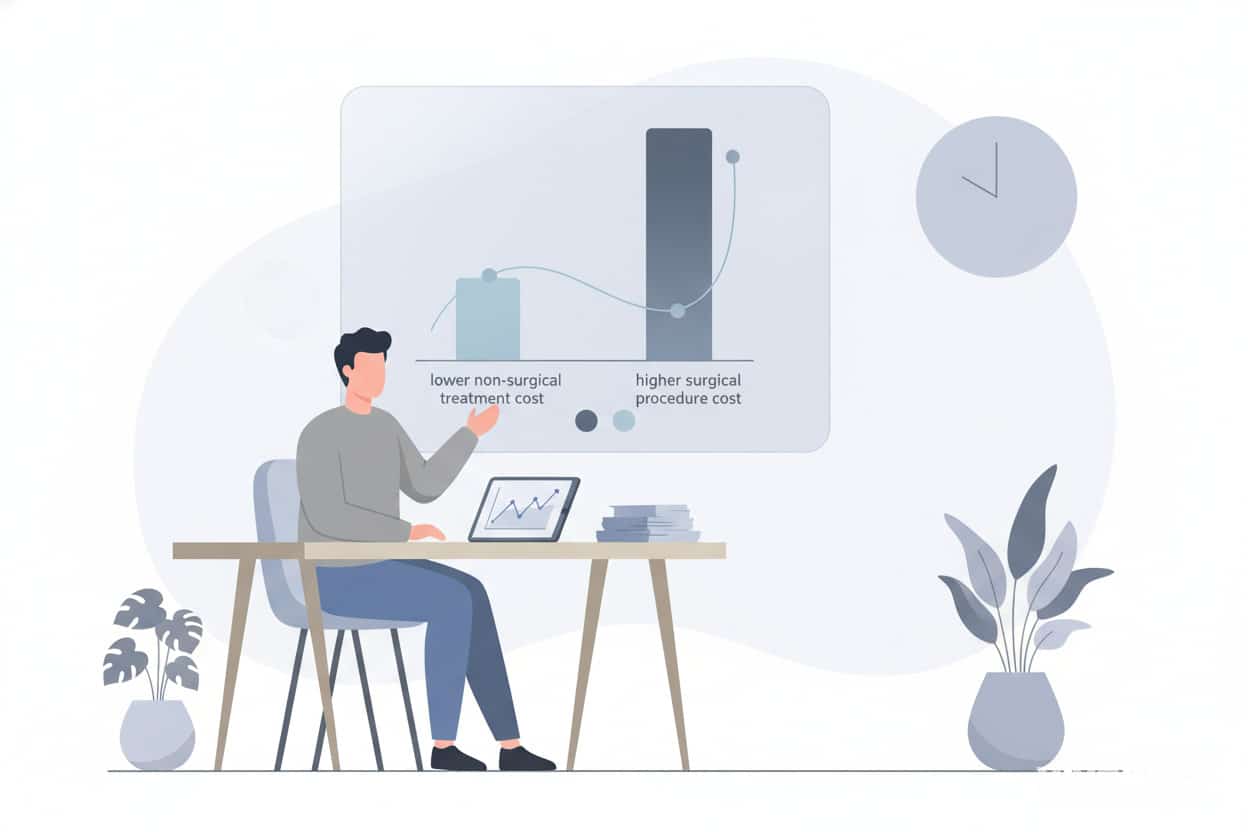
Cost is often one of the first deciding factors. In the UK, fat freezing is generally the lower entry-price option, while liposuction involves a much higher upfront spend.
Fat freezing cost
- Starting from £49 per applicator at VIVO Body Studio clinics
- Total price depends on the size of the treatment area, number of applicators used and how many sessions are recommended
- Smaller areas may cost relatively little per visit, while multiple areas can increase the total cost significantly
Because fat freezing is priced per applicator or per session, the final amount varies. Some people need a single treatment to a small area; others need repeat sessions to improve contour. That means the headline starting price is useful, but not the full story.
Liposuction cost
- Usually around £2,500 to £6,000+ in the UK
- Price varies according to the body area, number of areas, surgeon experience, hospital or clinic fees and anaesthesia costs
- Additional charges may include compression garments, aftercare and pre-operative assessments
Liposuction can sometimes work out cost-effective when a patient wants larger-volume treatment in one procedure, but the upfront expense is still much greater. Unlike fat freezing, it is usually carried out once rather than over several sessions.
Neither treatment is usually available on the NHS when performed for cosmetic reasons, and private health insurance does not generally cover purely aesthetic procedures.
If your priority is a lower-cost, lower-commitment starting point, fat freezing is often easier to access. If your main goal is more dramatic reshaping in one go, liposuction may justify the higher spend for some patients.
Recovery time and downtime
Recovery is one of the clearest distinctions between these procedures.
Fat freezing recovery
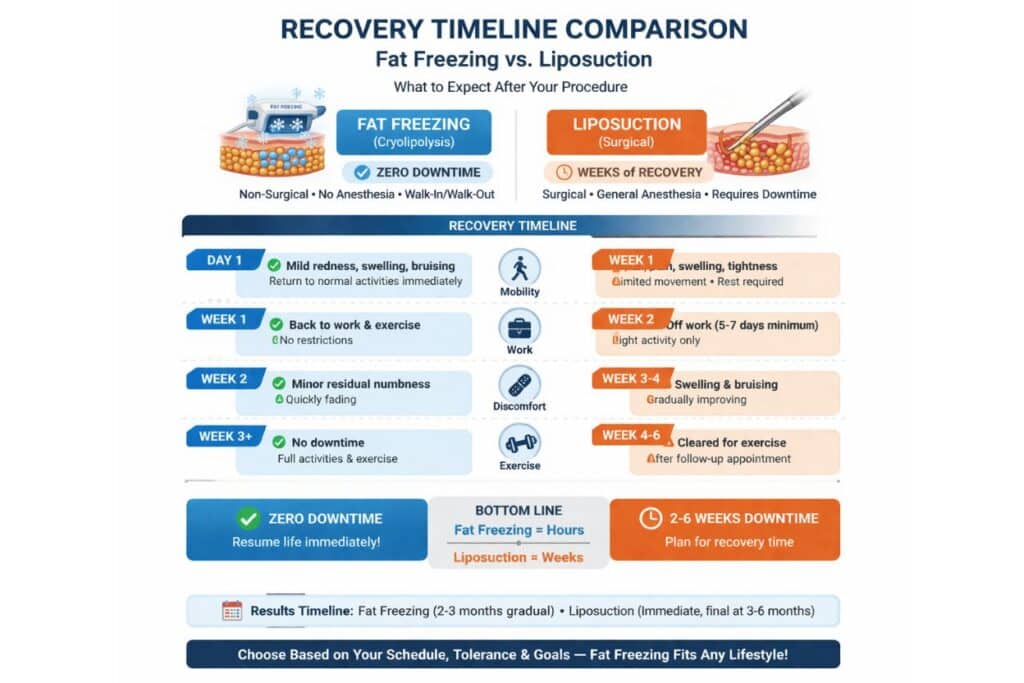
Fat freezing is widely chosen because there is zero downtime. Most people go straight back to work, driving, errands or normal daily life after the appointment. You may notice temporary redness, tingling, firmness, numbness or sensitivity in the treated area, but these effects are usually mild and short-lived. Published evidence on cryolipolysis has found it to be generally well tolerated in appropriate patients according to clinical review literature.
Liposuction recovery
Liposuction recovery is more involved. Most patients need around 2 to 6 weeks for recovery, depending on the extent of treatment and the physical demands of their work. Swelling, bruising, soreness and the need to wear compression garments are common. Although some people return to desk-based work after about a week, full recovery and final refinement can take much longer.
The British Association of Aesthetic Plastic Surgeons advises that all surgery carries risks and requires suitable aftercare, downtime and realistic expectations for liposuction patients.
Anaesthesia differences
- Fat freezing: no anaesthesia is required
- Liposuction: often performed under general anaesthesia, though some techniques may use local anaesthesia with sedation depending on the area and extent of treatment
If you cannot take time away from work, childcare or exercise routines, fat freezing is usually the more practical option. If you are comfortable with recovery and want stronger change sooner, liposuction may still be worth considering.
Fat Freezing vs Liposuction: benefits and considerations
Benefits
- Fat freezing: non-surgical, no anaesthesia, no incisions and no downtime
- Fat freezing: suitable for small, stubborn pockets of fat in people close to their goal weight
- Fat freezing: lower starting cost, with pricing from £49 per applicator
- Liposuction: removes a larger volume of fat in one procedure
- Liposuction: results can look more dramatic and are visible sooner once swelling settles
- Liposuction: may be preferable for patients wanting stronger contour change from a single treatment
Considerations
- Fat freezing: results are gradual and typically more modest, often around 10 to 25% reduction in a treated area
- Fat freezing: multiple sessions may be needed, which can increase the total cost
- Fat freezing: not ideal for people seeking major volume reduction or significant skin tightening
- Liposuction: surgical procedure with recovery time of roughly 2 to 6 weeks
- Liposuction: higher upfront cost, commonly £2,500 to £6,000 or more
- Liposuction: involves surgical and anaesthetic risks, plus possible bruising, swelling and scarring
Results: how much fat can each treatment remove?
Results are where expectations need to be especially clear.
Fat freezing results
Fat freezing usually produces a gradual reduction of around 10 to 25% in the treated area, depending on the individual, the body area and the treatment plan. The body then naturally processes the affected fat cells over the following weeks and months. Many people start noticing visible change from about 6 to 12 weeks, with improvement continuing beyond that. If you want a realistic week-by-week overview, our guides to fat freezing results over time and the cryolipolysis results timeline can help set expectations.
Clinical studies suggest cryolipolysis can reduce localised fat safely and effectively in selected patients based on peer-reviewed evidence, but it is not a substitute for weight loss treatment.
Liposuction results
Liposuction can remove a much larger amount of fat in one procedure. The change is more immediate, although final results still evolve as swelling subsides over 1 to 3 months or longer. This makes liposuction better suited to people who want a more dramatic reshaping effect or need a larger volume removed.
Are the results permanent?
In practical terms, yes, both treatments can permanently remove or reduce fat cells in the treated area. However, that does not mean future weight gain is impossible. Remaining fat cells can still enlarge if calorie intake exceeds expenditure over time. Long-term results depend heavily on weight stability, lifestyle and overall health habits.
What about skin tightening?
Neither treatment should automatically be seen as a skin-tightening procedure. If loose skin is a major concern, you may need a separate conversation about adjunctive treatments such as radio frequency body tightening or HIFU body tightening, depending on suitability.
Fat freezing is usually about convenience and subtle contouring; liposuction is usually about bigger change and accepting surgery to achieve it.
Risks and safety: which is safer?
Safety depends not only on the procedure itself, but also on patient selection, clinician experience, the treatment setting and your medical history.
Fat freezing risks
Fat freezing is generally considered lower risk because it is non-invasive. Common side effects are temporary and may include:
- Redness
- Numbness or tingling
- Bruising
- Tenderness
- Firmness or swelling in the treated area
A rare but important complication is paradoxical adipose hyperplasia, in which the treated area enlarges rather than shrinks. It is uncommon, but it should be discussed honestly during consent. Our page on PAH risk after fat freezing covers this in more detail. For general safety information, see also the available evidence on cryolipolysis safety and adverse events.
Liposuction risks
Liposuction has the risks associated with surgery and anaesthesia. These may include:
- Infection
- Bleeding
- Scarring
- Contour irregularities or asymmetry
- Fluid accumulation
- Anaesthetic complications
- Blood clots in rare cases
The NHS advises that all cosmetic surgery carries the possibility of complications and requires informed consent and careful provider choice before proceeding.
So which is safer?
For most suitable candidates, fat freezing is generally safer because it avoids incisions, sedation and surgical recovery. That said, safer does not always mean better for your goal. If you need substantial fat removal, a surgical option may still be the more effective route when performed by an appropriately qualified surgeon in a regulated setting.
Which procedure may be right for you?
A balanced answer depends on your body goals, budget, timetable and comfort level.
Fat freezing may suit you if:
- You are near your goal weight but have stubborn localised fat
- You want a non-surgical treatment
- You cannot take time off work or family responsibilities
- You are comfortable with gradual results
- You want to start with a lower upfront cost
Liposuction may suit you if:
- You want larger-volume fat removal
- You prefer more immediate, dramatic change
- You are willing to undergo surgery and recovery
- You understand the risks and costs involved
- You want to treat one or more areas in a single operative plan
For people who are not ideal candidates for either option, alternatives such as fat dissolving injections, medical weight management or exercise-focused body contouring may be discussed during consultation.
VIVO Body Studio offers fat freezing services across various UK cities as part of its non-invasive body contouring offering. For patients who want to avoid surgery and return to normal activities immediately, that can make fat freezing a convenient first step. Even so, a reputable clinic should always assess whether the treatment is appropriate rather than promising the same result as liposuction.
The best treatment is not the most popular one; it is the one that matches your goals, anatomy, recovery tolerance and expectations.

Frequently Asked Questions
Is fat freezing as effective as liposuction?
Usually not in terms of sheer fat removal. Fat freezing can be effective for small, localised pockets of stubborn fat, but liposuction removes a much larger volume in one procedure and tends to produce more dramatic contouring. Fat freezing is often better seen as a lower-risk, lower-downtime option rather than a direct like-for-like replacement.
Can fat freezing replace liposuction?
For some people, yes; for others, no. If you only want modest reduction in areas such as the abdomen, flanks, arms or under the chin, fat freezing may be enough. If you want major reshaping, larger-volume reduction or the most immediate visible change, liposuction is often the more appropriate treatment.
Which is safer: fat freezing or liposuction?
Fat freezing is generally considered safer because it is non-surgical and does not require anaesthesia. Side effects are usually mild and temporary. Liposuction carries surgical and anaesthetic risks, so the risk profile is higher. However, any procedure should still be performed by a qualified, reputable provider after proper assessment.
Which results last longer?
Both can offer long-lasting results because both remove or reduce fat cells in the treated area permanently. In both cases, results depend on maintaining a stable weight and healthy lifestyle. If you gain weight after treatment, remaining fat cells can still enlarge.
Can you combine fat freezing and liposuction?
Sometimes, yes, but this should only be done under professional guidance. Some patients use liposuction for larger areas and fat freezing later for small residual pockets. Others may combine non-surgical fat reduction with skin-tightening treatments instead. The right plan depends on timing, healing, anatomy and clinical suitability.
Does fat freezing work for weight loss?
No. Fat freezing is a body contouring treatment, not a weight-loss programme. It is designed for people close to their target weight who want to reduce stubborn fat in specific areas. If your main aim is broader weight reduction, medical weight management, nutrition support and exercise are usually more relevant first-line options.
How many fat freezing sessions are usually needed?
It varies by area and by individual response. Some people are happy after one session, while others need two or more treatments to achieve the contour they want. A consultation should assess the size of the fat pocket, your goals and whether a non-surgical approach is likely to meet them.
How soon will I see results after fat freezing?
Results are gradual. Some people begin to notice changes within a few weeks, but more visible improvement often appears around 6 to 12 weeks, with final results taking longer. This slower timeline is very different from liposuction, where the shape change is earlier but partly hidden at first by swelling.
Will I have scars after either treatment?
Fat freezing does not involve incisions, so it does not cause surgical scars. Liposuction requires small incisions, so some scarring is expected, although it is often minimal when healed well. Your surgeon should explain likely scar placement and aftercare before treatment.
Who is not a good candidate for fat freezing?
Fat freezing may not be suitable if you are seeking major fat loss, have significant loose skin, or have certain cold-sensitive medical conditions. It is also not appropriate for obesity treatment. A proper consultation should review your medical history and assess whether another option would be safer or more effective.