What is a non-surgical facelift in 2026?
A non-surgical facelift is not one single treatment. It is a broad term for procedures designed to lift, tighten, smooth or restore the face without incisions, general anaesthetic or the recovery associated with surgery. In 2026, the category includes ultrasound-based lifting, RF microneedling, thread lifts, Botox, dermal fillers, radiofrequency facials and LED therapy.
The key point is that these treatments work in different ways. Some stimulate collagen. Some replace lost volume. Some soften expression lines. Some create a mild to moderate lifting effect. That is why people often feel confused when searching for a facelift without surgery: many treatments are marketed as “lifting”, but not all of them actually lift tissue in the same sense.
Current evidence and clinical practice support non-surgical approaches as a valid option for mild to moderate ageing changes, especially for people who want natural-looking improvement rather than dramatic surgical change. A review published in Dermatologic Surgery highlights the growing role of minimally invasive facial rejuvenation and combination treatments. However, it is equally important to be realistic. Non-surgical results tend to last around one to three years, whereas a surgical facelift commonly lasts much longer.
For most people, the best approach is to match the treatment to the problem:
- Sagging and laxity: think HIFU, thread lifts or RF-based tightening.
- Loss of firmness and texture: think RF microneedling or Morpheus8.
- Wrinkles caused by movement: think Botox.
- Hollowing and volume loss: think dermal fillers.
- Maintenance and skin support: think RF facials and LED therapy.
VIVO Body Studio is the UK’s leading group of non-invasive aesthetic clinics, offering treatments including HIFU skin tightening and facelift treatment, Morpheus8 skin tightening, RF facials and LED-based skin rejuvenation at studios across the UK.

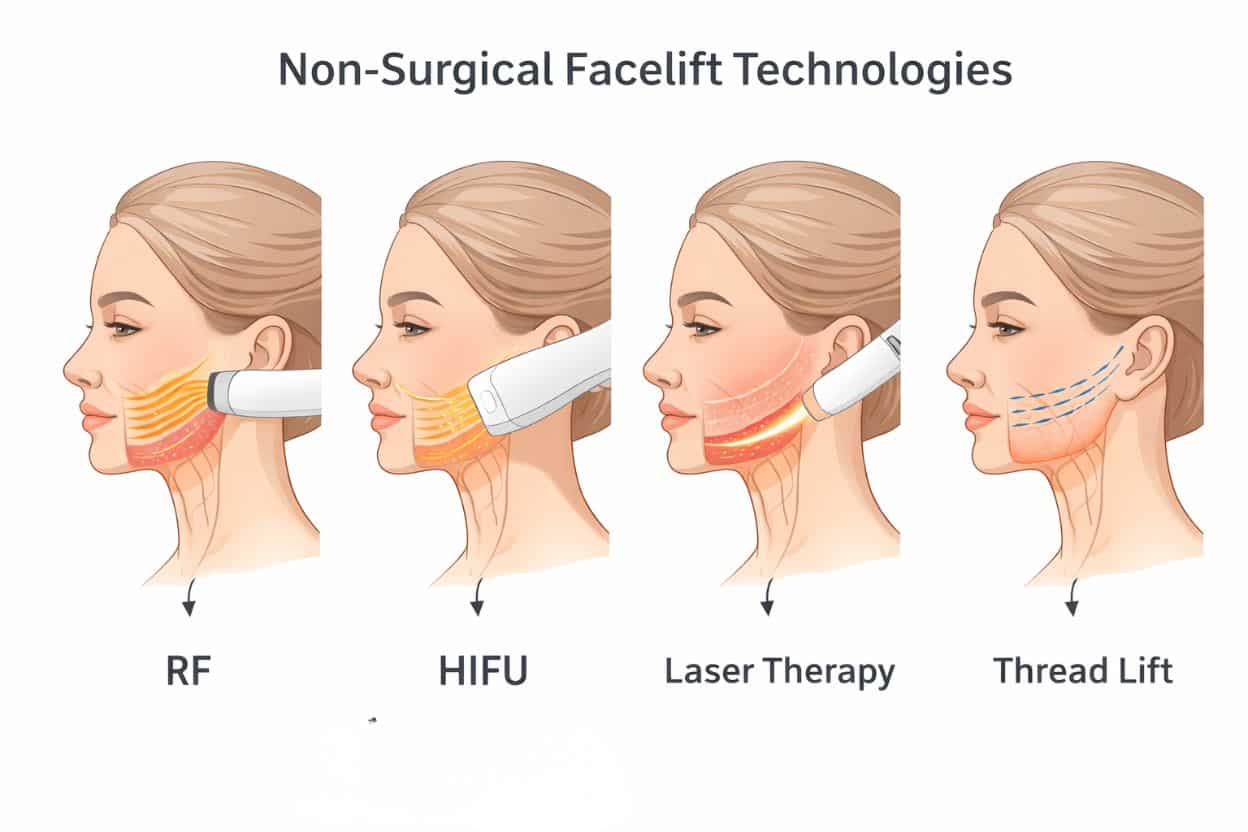
Modern non-surgical facelift treatments focus on lifting, tightening and rejuvenation with minimal downtime.
Which non-surgical facelift treatments actually work?
If your main goal is visible lifting without surgery, not all treatments are equal. Here is the practical landscape in 2026.
1. HIFU: the standout for true non-invasive lifting
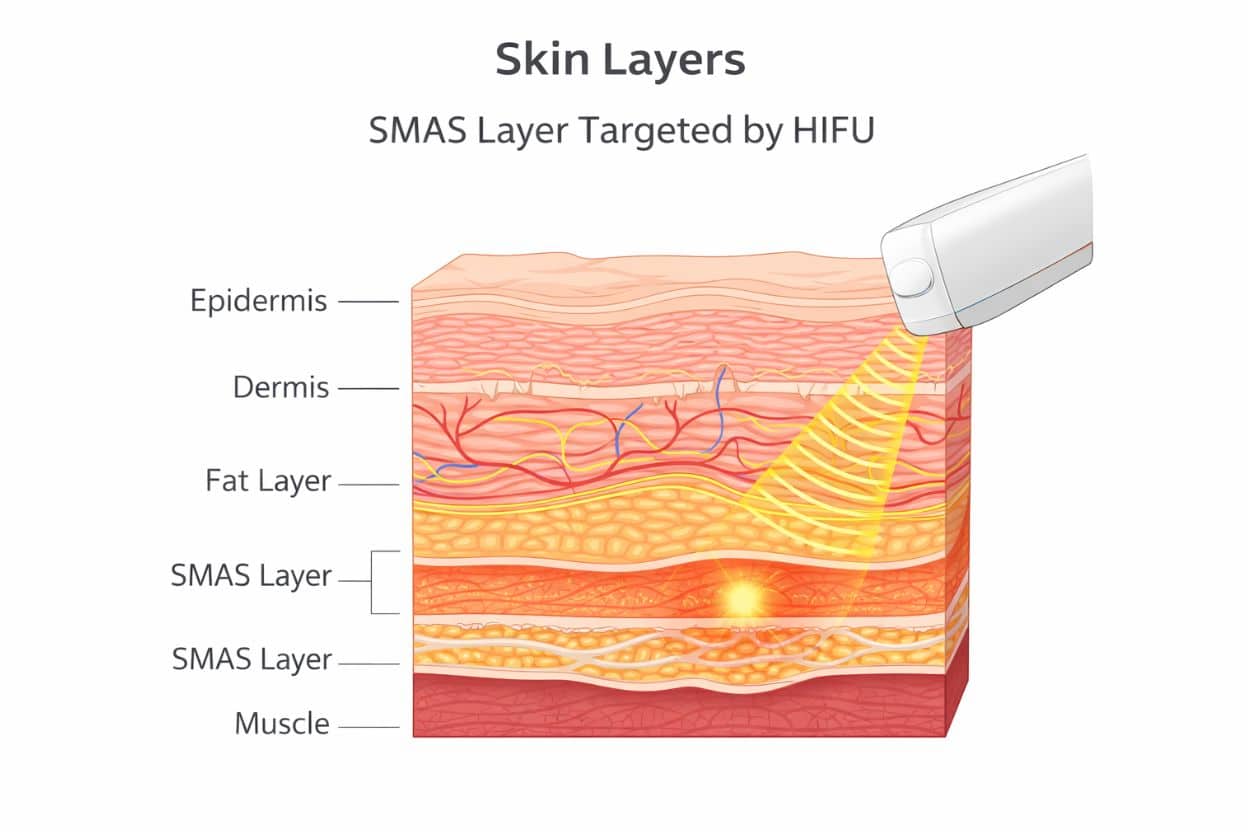
High-Intensity Focused Ultrasound, or HIFU, is the standout option for people specifically looking for a non-invasive face lift in the UK. The reason is simple: it can target the SMAS layer, the same foundational layer addressed in surgical facelifts. This is what makes it different from more superficial tightening treatments. If you want to understand how this compares with branded ultrasound systems, see this guide to HIFU vs Ultherapy.
HIFU delivers focused ultrasound energy beneath the skin while leaving the surface intact. The heat points trigger a wound-healing response and stimulate new collagen over time. Results are typically gradual, with improvement developing over 8 to 12 weeks and often continuing for several months.
What it does: mild to moderate lifting, jawline tightening, improved lower-face definition, subtle brow lift, firmer skin.
What it does not do: replace lost volume, erase all wrinkles, or match the results of a surgical facelift in cases of heavy sagging.
Longevity: often around 12 to 18 months, sometimes longer depending on skin quality, age and maintenance.
Approximate cost: commonly around £300 to £1,500+ depending on treatment area and provider.
Pain level: mild to moderate discomfort; often described as short bursts of heat or tingling.
Downtime: minimal. Some people notice temporary redness or tenderness, but most return to normal activities the same day.
For top-of-funnel readers asking “what actually lifts without surgery?”, HIFU is usually the most relevant answer because it is the only fully non-invasive option in this group that can reach the SMAS layer.
2. Thread lifts: immediate lift, but not non-invasive
Thread lifts use dissolvable PDO or PLLA threads placed under the skin to create a temporary scaffold. This gives a more immediate repositioning effect than HIFU, especially in the mid-face or jawline, while also stimulating collagen as the threads dissolve.
What it does: provides a temporary mechanical lift and can improve mild jowling or soft tissue descent.
What it does not do: improve skin texture as effectively as resurfacing or RF microneedling, or produce permanent lifting.
Longevity: usually around 6 to 18 months, depending on thread type, placement and the individual.
Approximate cost: often £1,000 to £2,500+.
Pain level: moderate, although local anaesthetic is typically used.
Downtime: several days to two weeks of swelling, tenderness or bruising is not unusual.
Thread lifts can work well for selected patients, but they are minimally invasive, not non-invasive, and the results depend heavily on practitioner skill and patient suitability.
3. RF microneedling and Morpheus8: excellent for remodelling, not deep lifting
RF microneedling combines controlled needling with radiofrequency energy delivered into the dermis. Morpheus8 is one of the best-known examples. These treatments are particularly useful for improving crepey skin, refining texture, tightening the superficial to mid-depth layers and stimulating collagen and elastin.
What it does: skin remodelling, pore and texture improvement, firmer-looking skin, softening fine lines, some contour refinement.
What it does not do: directly target the SMAS layer or produce the same lifting mechanism as HIFU.
Longevity: often 6 to 12 months after a course, with maintenance recommended.
Approximate cost: often £400 to £1,200 per session depending on area and clinic.
Pain level: moderate; topical numbing is commonly used.
Downtime: usually 1 to 3 days of redness, with occasional dryness or sensitivity for longer.
This is why RF microneedling is often one of the best partners for HIFU rather than a direct replacement. If HIFU is about deeper structural lifting, Morpheus8 is more about dermal remodelling and skin quality.
4. Botox: excellent for lines, not lifting loose tissue
Botox and other neuromodulators work by relaxing targeted muscles. They are highly effective for dynamic lines on the forehead, frown area and around the eyes, and in some cases can create a subtle brow-lifting effect or soften downward pull in the lower face.
What it does: smooths movement-related wrinkles and can refine facial balance.
What it does not do: tighten loose skin, rebuild collagen or restore volume.
Longevity: typically 3 to 4 months.
Approximate cost: commonly £150 to £350+ depending on areas treated.
Pain level: low.
Downtime: minimal.
For readers exploring anti-ageing treatments without surgery, Botox is useful, but it is not a true substitute for lifting treatments. You can read more about Botox anti-ageing injections if wrinkles are your main concern.
5. Dermal fillers: restore volume rather than tighten skin
Dermal fillers are often called a “liquid facelift”, but that phrase can be misleading. Fillers do not tighten skin in the way HIFU or RF devices do. Instead, they restore lost volume in areas such as the cheeks, temples, marionette lines or jawline, which can create a fresher and sometimes mildly lifted appearance.
What it does: replenishes volume, improves contour and can reduce a tired or hollow look.
What it does not do: address significant skin laxity or improve tissue quality on its own.
Longevity: often 6 to 18 months depending on product and area.
Approximate cost: often £250 to £500+ per syringe.
Pain level: low to moderate.
Downtime: minimal to a few days if there is swelling or bruising.
Fillers can be effective when volume loss is the main issue, but overfilling is a genuine risk if they are used to compensate for sagging that would be better treated with tightening or lifting procedures.
6. Radiofrequency facials: gentle tightening and maintenance
Standard radiofrequency facials heat the skin more superficially than HIFU and more gently than RF microneedling. They can improve firmness and support collagen remodelling over time, particularly as a maintenance treatment.
What it does: mild tightening, improved circulation, a fresher look and ongoing collagen support.
What it does not do: create meaningful lifting in deeper tissue.
Longevity: best with a course of treatments and regular maintenance.
Approximate cost: often £75 to £300 per session.
Pain level: low.
Downtime: usually none.
For those easing into skin tightening treatments, a radiofrequency face lift treatment can be a good lower-commitment starting point.
7. LED therapy: supportive rather than transformative
LED therapy uses specific wavelengths of light to support cellular activity and skin recovery. Red light is commonly used for collagen support and inflammation reduction. It is best thought of as an adjunct treatment rather than a standalone facelift without surgery.
What it does: supports healing, glow, collagen function and post-treatment recovery.
What it does not do: lift sagging tissue or replace more powerful tightening technology.
Longevity: requires repeated sessions.
Approximate cost: often £30 to £100 per session.
Pain level: none.
Downtime: none.
As part of a combined plan, LED light facial therapy can help support skin quality and maintenance between more intensive procedures.
A quick comparison table
| Treatment | Main job | Lift potential | Downtime | Typical duration |
|---|---|---|---|---|
| HIFU | Deep tissue tightening | Moderate | Minimal | 12-18 months |
| Thread lift | Mechanical lift | Moderate | Moderate | 6-18 months |
| Morpheus8 / RF microneedling | Dermal remodelling | Mild | Low to moderate | 6-12 months |
| Botox | Muscle relaxation | Very mild / indirect | Minimal | 3-4 months |
| Fillers | Volume restoration | Mild / contour-based | Minimal | 6-18 months |
| RF facial | Superficial tightening | Mild | None | Needs maintenance |
| LED therapy | Skin support | Very low | None | Needs maintenance |
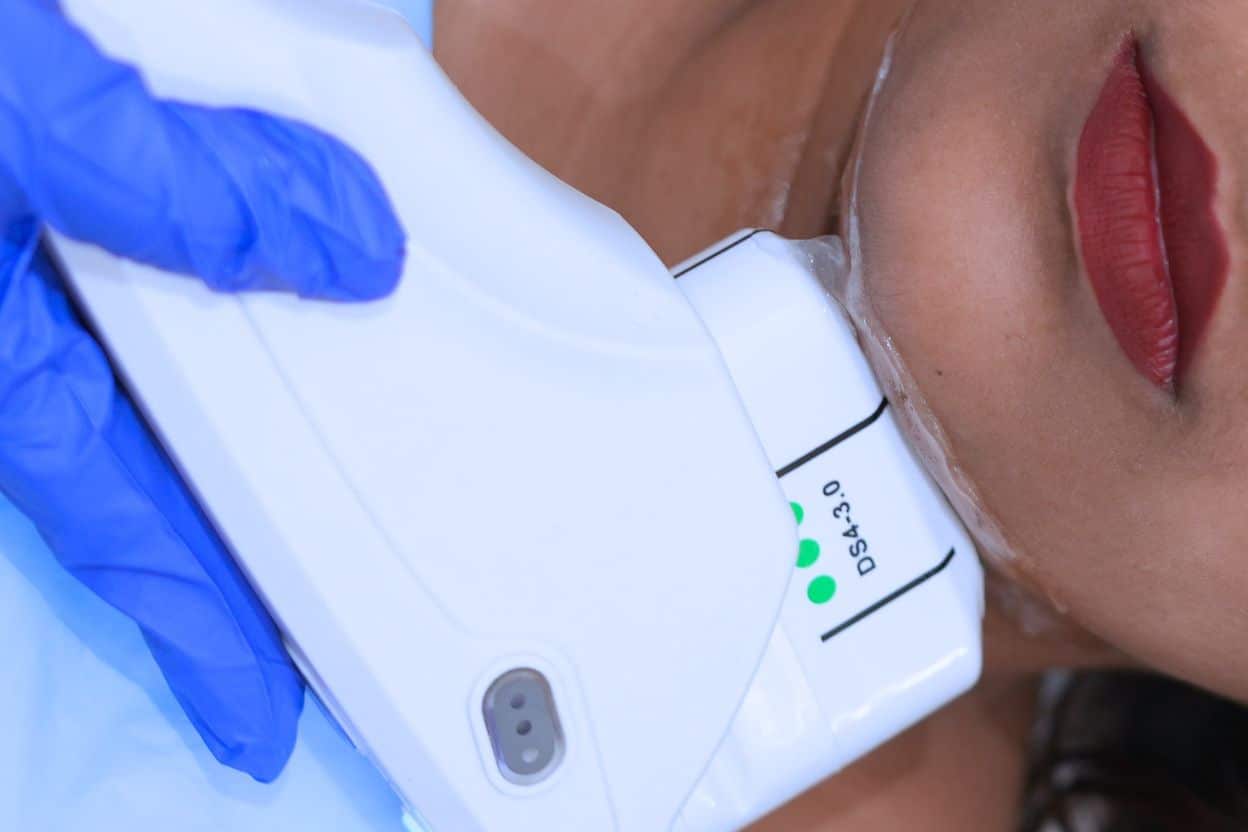
Different technologies work at different depths, which is why treatment choice matters.
Are non-surgical facelift options worth it?
Benefits
- Lower risk and far less downtime than surgery for suitable candidates.
- Can deliver meaningful improvement in mild to moderate skin laxity, texture and facial freshness.
- Allows a tailored plan: lift, tighten, smooth wrinkles and restore volume in stages.
- Results usually look gradual and natural rather than dramatically altered.
- Useful as early intervention or as maintenance after a previous surgical facelift.
Considerations
- No single treatment can do everything; lifting, volume loss and wrinkles often need different solutions.
- Results are temporary and usually require maintenance every few months to couple of years.
- Severe sagging or heavy jowls may still be better addressed surgically.
- Costs can add up over time, especially with combination treatments.
- Outcomes depend heavily on practitioner assessment, device quality and patient suitability.
Why HIFU stands out in the non-surgical facelift 2026 conversation
When people search for the best non-surgical facelift, they are usually not asking for smoother skin alone. They are asking whether there is anything that can genuinely lift without surgery. That is where HIFU has a clear advantage.
Unlike topical facials, light therapies and even many collagen-stimulating treatments, HIFU can reach deeper support structures associated with facial sagging. This does not mean it replaces surgery. It does mean it occupies a very specific and valuable middle ground: more structurally meaningful than a standard facial, but without the invasiveness of a thread lift or operation.
Clinical and consumer interest in ultrasound tightening remains strong because of this. Patients with mild jowling, early lower-face laxity, a soft jawline or slight brow descent are often the best candidates. Those with heavier tissue or marked sagging may still require surgery for a truly dramatic repositioning effect.
That balanced view matters. No ethical clinic should claim that one treatment does everything. A good practitioner should assess:
- whether your main issue is laxity, volume loss, wrinkles, texture or all of the above;
- how much visible change you want;
- how quickly you want to see results;
- how much downtime you can accept;
- your budget for initial treatment and maintenance.
Many of the best outcomes now come from combination plans. For example, HIFU for deep support, Morpheus8 for surface-to-dermal remodelling, Botox for expression lines and LED for skin recovery. If you are comparing technologies, readers often find it helpful to explore how Morpheus8 works for skin tightening and remodelling alongside HIFU options.
There are also newer adjunctive technologies on the market, including plasma-based rejuvenation approaches. For example, cold plasma skin rejuvenation may support skin quality and recovery, although it should not be confused with a true lifting treatment.
Who is a good candidate for a facelift without surgery?
You may be a good candidate if you:
- have mild to moderate skin laxity rather than severe sagging;
- want natural-looking improvement rather than dramatic change;
- prefer little or no downtime;
- are not ready for surgery, or do not want it at all;
- understand that maintenance is part of the process.
You may be better served by a surgical consultation if you have pronounced jowls, heavy neck laxity or significant skin redundancy. The NHS provides general information on cosmetic procedures and the importance of informed consent and realistic expectations at its cosmetic procedures advice pages.
How to choose the right treatment
Ask yourself one practical question: what bothers you most?
- If it is sagging: prioritise HIFU or consider thread lifting if you accept a more invasive approach.
- If it is texture and crepiness: look at RF microneedling or Morpheus8.
- If it is forehead and eye lines: Botox may be the most effective option.
- If it is hollow cheeks or temples: fillers may be more appropriate.
- If it is maintenance and glow: RF facials and LED therapy can be useful additions.
At consultation, a trustworthy practitioner should tell you not just what a treatment can do, but also what it cannot do. That is especially important in aesthetic medicine, where terms like “facelift” are often used loosely.
The best non-surgical facelift is not the trendiest treatment. It is the one that matches the actual cause of ageing in your face.
The strongest non-surgical results usually come from realistic goals and the right treatment plan.
Combination approaches: what many clinics recommend now
One reason the non-surgical facelift 2026 market is stronger than ever is that practitioners are no longer relying on one tool alone. Combination treatment plans are now common because ageing is multi-layered. Skin quality changes. Fat pads shift. Muscle movement creates lines. Collagen declines. Bone support changes over time.
A smart plan may look like this:
- HIFU for deeper lifting and jawline support.
- Morpheus8 or RF microneedling for dermal remodelling and texture.
- Botox for dynamic lines.
- Fillers for strategic volume replacement, if needed.
- LED or RF facials for maintenance and skin support.
This layered approach often produces more balanced results than overdoing any single treatment. It can also spread cost and downtime more manageably over time.
VIVO Body Studio offers HIFU, Morpheus8, RF facials and more at studios across the UK, making it possible for clients to build personalised plans rather than forcing one treatment to do every job.
Safety and evidence matter
As with any aesthetic treatment, safety depends on proper screening, suitable technology and practitioner training. A consultation should cover your medical history, skin concerns, likely outcome, side effects, aftercare and whether you are an appropriate candidate. Peer-reviewed evidence supports many of these technologies, but outcomes still vary widely in real-world practice depending on protocols and patient selection.
That is why it is wise to favour providers who explain treatment depth, mechanism and limitations clearly, rather than simply promising a “facelift without surgery”. Evidence-based information from sources such as Dermatologic Surgery and guidance on treatment risks from the NHS can help you ask better questions at consultation.
Final verdict: what actually works?
If your definition of success is smoother skin and a fresher look, several anti-ageing treatments without surgery can work well. If your definition is actual lifting without going under the knife, HIFU deserves serious attention because of its ability to target the SMAS layer non-invasively.
Still, balance is essential. HIFU does not replace filler where volume loss is the issue. It does not outperform Botox for expression lines. It does not improve texture in the same way as Morpheus8. The strongest plans are usually customised rather than one-size-fits-all.
So, what works? In 2026, the answer is: several things work, but they work for different reasons. For genuine non-invasive lifting, HIFU is the standout. For better skin quality, RF microneedling is excellent. For wrinkles, Botox remains highly effective. For volume loss, fillers have a role. And for maintenance, RF facials and LED therapy can support longer-lasting, more polished results.
HIFU is the standout option for people who want true non-invasive lifting, but the best facial rejuvenation plans rarely rely on one treatment alone.
Frequently Asked Questions
What is the best non-surgical facelift?
The best non-surgical facelift depends on what you mean by “best”. If you want actual lifting without incisions, HIFU is often the standout because it can reach the SMAS layer, the same foundational layer targeted in surgical facelifts. If your concern is mainly wrinkles, Botox may be more effective. If it is skin texture and firmness, Morpheus8 or RF microneedling may be better. If it is volume loss, fillers may help more than tightening treatments.
In practice, the best outcome often comes from a combination plan rather than one treatment alone.
How long does a non-surgical facelift last?
Most non-surgical facelift treatments last somewhere between a few months and around one to three years, depending on the treatment used. Botox often lasts 3 to 4 months. Fillers commonly last 6 to 18 months. HIFU often lasts around 12 to 18 months, and thread lifts may last 6 to 18 months. Maintenance is usually needed to keep results looking their best.
This is one of the main trade-offs compared with surgery, which typically lasts much longer.
Can you get a facelift without surgery on the NHS?
In most cases, cosmetic facelift treatments, whether surgical or non-surgical, are not available on the NHS if they are being sought for aesthetic reasons alone. The NHS generally funds treatment based on clinical need rather than cosmetic preference. You can read more about this approach on the NHS cosmetic procedures guidance.
If you are considering private treatment, make sure you choose a provider that offers a proper consultation, realistic advice and clear aftercare.
At what age should you consider a non-surgical facelift?
There is no perfect age. Many people start considering a non-surgical facelift in their late 30s to 50s, when early laxity, jowling or loss of firmness become more noticeable. That said, treatment should be based on skin condition and goals rather than age alone.
Someone in their 30s may benefit from preventative collagen support and subtle tightening, while someone in their 50s may need a more layered plan involving lifting, wrinkle treatment and volume restoration.
What is the newest non-surgical facelift technology?
The newest technologies tend to be refinements of existing categories rather than completely new concepts. In 2026, advanced RF microneedling platforms, biostimulatory thread techniques and newer plasma-based rejuvenation tools are all gaining attention. However, newer does not automatically mean better for lifting.
For people specifically seeking a non-invasive facelift effect, HIFU remains one of the most important technologies because of its ability to target deep support tissue. The most effective modern approach is often not the newest device, but the right combination of proven treatments for your concerns.