Why Skin Stops Snapping Back
Somewhere in your thirties, you may notice that your skin no longer behaves the way it used to. Fine lines linger a little longer, your jawline feels softer than it once did, and the skin around your eyes and neck begins to look subtly looser. These changes are not your imagination, nor are they purely cosmetic. They reflect a deep, coordinated shift in skin biology, driven primarily by the steady loss of collagen.
Collagen makes up roughly 70 to 85% of the dry weight of the dermis, the supportive layer beneath the surface of your skin. It is the protein scaffold that keeps skin firm, plump and resilient. As collagen declines in both quantity and quality, the framework that holds everything up gradually weakens, and gravity does the rest. Understanding exactly why this happens after 30 helps explain why some treatments work and others simply cannot.

The Architecture Beneath Your Skin
To understand sagging, it helps to picture how skin is actually built. Skin has two main layers: the outer epidermis, which forms the protective barrier you can see and touch, and the deeper dermis, a connective tissue matrix packed with collagen, elastin, blood vessels and the cells that maintain them. Below these sits the hypodermis, a layer of fat that cushions and contours the face.
The dermis is where firmness lives. It is dominated by type I collagen, which provides strength and stiffness, and type III collagen, which contributes elasticity and is especially abundant in younger skin. These fibres are produced by cells called fibroblasts, and they are woven together with elastic fibres that allow skin to stretch and recoil. Hyaluronic acid fills the spaces between them, binding water and keeping the tissue plump.
In youthful skin, this network is dense, well organised and three-dimensional, distributing tension evenly and resisting the constant downward pull of gravity. As we age, the network thins, fragments and flattens. Collagen bundles clump and become disorganised, and these microscopic changes correlate closely with the visible wrinkles and laxity we see in the mirror, as detailed in research published in the Journal of Cell Communication and Signaling.

The Collagen Timeline: What Happens After 25
Collagen production does not stay constant throughout life. Most evidence suggests synthesis begins to decline in the mid-twenties, falling by roughly 1% per year thereafter. In your twenties this drop is barely perceptible, because collagen stores remain high and repair mechanisms are efficient. By the early to mid-thirties, however, the cumulative effect of slightly reduced production combined with ongoing degradation begins to tip the balance towards net loss.
This is why the “after 30” threshold is so often cited. It is not a strict biological switch but a clinical observation: the point at which the slow accounting of collagen synthesis versus breakdown begins to run at a deficit. People with heavy sun exposure, a history of smoking or poor diet may notice changes sooner, while those with diligent sun protection and favourable genetics may keep firm skin well into their forties.
Why Fibroblasts Slow Down
The fibroblasts responsible for making collagen become both fewer and less active with age. Some enter a state called senescence, where they stop dividing but remain metabolically active, secreting inflammatory signals and matrix-degrading enzymes that further weaken the surrounding tissue. Crucially, when collagen fibres fragment, fibroblasts lose their anchorage and structural support, adopt a more rounded shape and produce even less collagen. It becomes a self-reinforcing cycle: degraded collagen produces dysfunctional fibroblasts, which in turn produce less collagen.
Menopause: When Collagen Loss Accelerates
For women, the menopausal transition is one of the clearest examples of how quickly collagen loss can accelerate. Oestrogen plays a powerful protective role in skin, stimulating fibroblasts to produce collagen, increasing hydration and maintaining thickness and elasticity. Receptors for oestrogen are present throughout the skin, so when levels fall sharply during and after menopause, the effects are widespread.
Longitudinal studies, including data reviewed in the research on skin collagen and menopause, suggest that skin collagen content declines by around 2.1% per year in the first 15 years after menopause, with skin thickness dropping by roughly 1.1% annually. This outpaces chronological ageing alone, which is why many women report a noticeable change in skin texture and firmness in their late forties and fifties, particularly around the lower face, neck and hands.
Sun Damage and Glycation: The Accelerators
While intrinsic ageing is inevitable, two external factors dramatically speed up collagen loss. The first is ultraviolet radiation. Sun exposure is the single most important cause of premature skin ageing, a process known as photoageing. UVA penetrates deep into the dermis, generating reactive oxygen species that activate enzymes called matrix metalloproteinases. These enzymes cleave and dismantle collagen fibres, while simultaneously suppressing the signals that tell fibroblasts to make new collagen. The result, documented extensively in research from the Archives of Dermatology, is fragmented collagen, disorganised elastic fibres and the leathery, lax appearance of sun-damaged skin.
The second accelerator is glycation. This is the non-enzymatic reaction of sugars with proteins, producing advanced glycation end products. Collagen is especially vulnerable because it is long-lived and rich in the amino acids that sugars latch onto. Glycation creates abnormal cross-links between collagen molecules, making fibres stiff, brittle and resistant to normal repair. This “sugar sag” effectively freezes the matrix in a dysfunctional state, which is why diets high in refined sugar are associated with accelerated skin laxity.
Sagging is not simply skin that has thinned. It is a structural collapse beneath the surface, where collagen, elastin, fat and supporting ligaments all give way to gravity together.
Why Skincare Alone Cannot Reverse Sagging
This is the part many people find frustrating. You may use excellent products, including retinoids and vitamin C, and still see your jawline and neck soften over time. The reason is anatomical. Skincare products act primarily on the epidermis and the upper dermis. Proven actives can genuinely improve barrier function, hydration and fine lines, and ingredients like retinoids can modestly stimulate collagen in the superficial dermis.
However, meaningful sagging reflects changes far deeper down: thinning of the mid and deep dermis, loss and descent of subcutaneous fat, and laxity of the retaining ligaments and the superficial muscular aponeurotic system, known as the SMAS layer. This is the same fibrous layer that surgeons tighten during a facelift. No cream can penetrate to this depth or reposition these structures. As the American Academy of Dermatology notes, claims of facelift-like results from a jar are simply not supported by biology.
When a firming cream produces an immediate “tightening” sensation, that effect usually comes from surface hydration or film-forming agents, not from deep remodelling. Good skincare remains essential for slowing progression and improving overall skin quality, but it works on a different level entirely from the structures responsible for laxity.
Topical Skincare for Sagging Skin: A Realistic View
What Skincare Can Do
- Improve hydration, texture and surface smoothness
- Stimulate modest collagen in the upper dermis with retinoids
- Neutralise free radicals with antioxidants like vitamin C
- Reduce glycation and support barrier function with niacinamide
- Protect against further sun-driven collagen breakdown
What Skincare Cannot Do
- Cannot reach or remodel the deep dermis or SMAS layer
- Cannot reposition descended fat or lax ligaments
- Cannot reverse established structural laxity
- Cannot replicate the lifting effect of energy-based devices or surgery
- Results are gradual and subtle rather than transformative
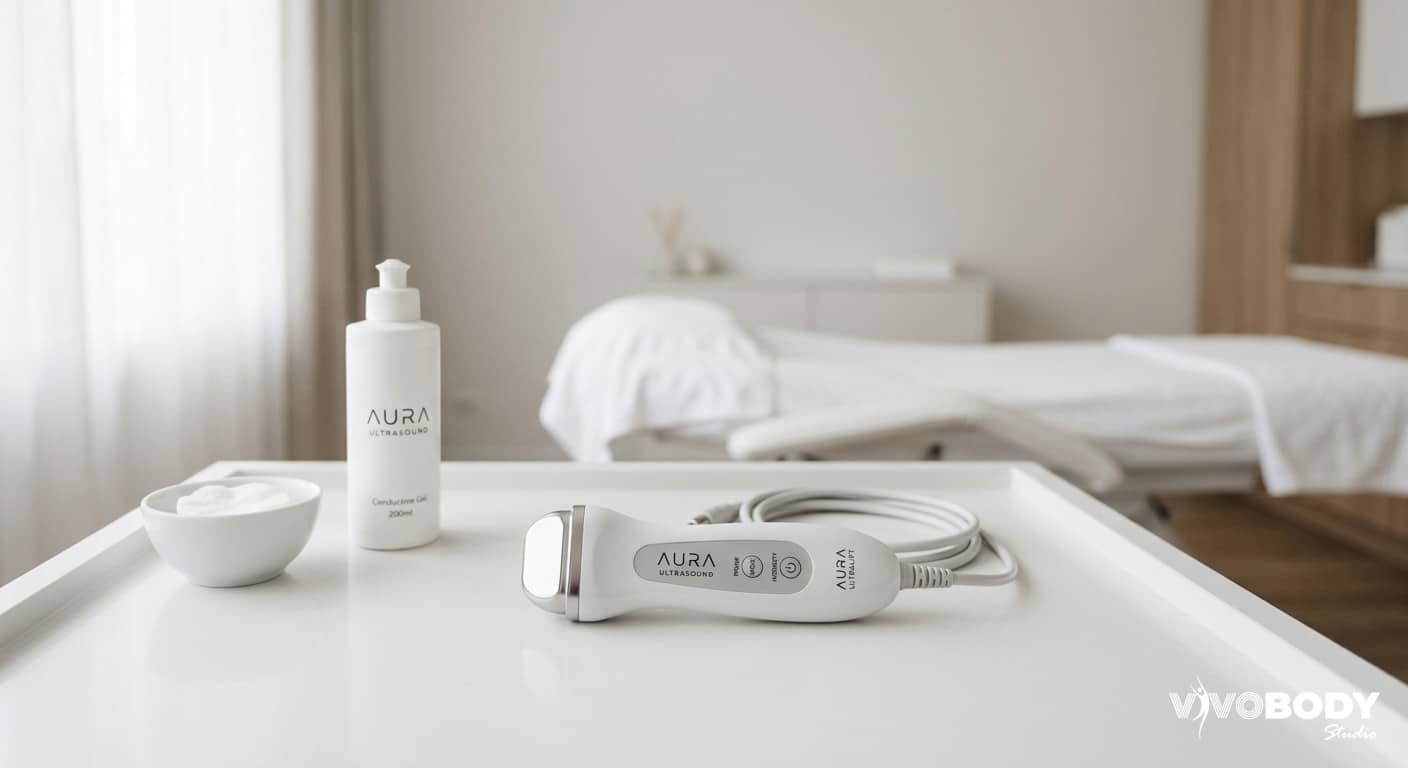
How HIFU Works Where Sagging Begins
If skincare cannot reach the SMAS layer, what can? This is precisely where High-Intensity Focused Ultrasound, or HIFU, comes in. HIFU delivers focused ultrasound energy to precise depths beneath the skin, including the SMAS layer where facial sag originates, without damaging the surface. At each focal point, the energy creates a tiny zone of controlled thermal coagulation.
This targeted heating does two things. It causes immediate contraction of existing collagen, and, more importantly, it triggers a wound-healing response that prompts fibroblasts to produce fresh collagen over the following months. The result is a gradual lifting and tightening effect that builds progressively, typically reaching its peak two to six months after treatment as the new collagen matures. Because the energy is focused at depth and spares the epidermis, there is usually little to no downtime.
HIFU is best suited to mild to moderate laxity, making it a popular non-surgical option for those in their thirties to fifties who want to address early jawline softening, brow heaviness or neck laxity. Our HIFU facelift and body tightening treatment targets these deeper structural layers directly, working with the body’s own collagen-building biology rather than against it. For those weighing up their options, our guide to non-surgical facelift options in 2026 sets out how it compares with other approaches.
Is HIFU Right for You?
Candidacy matters with any energy-based treatment. HIFU produces the most satisfying results in people with genuine but early to moderate laxity, where there is still enough collagen-producing capacity to respond well to stimulation. Those with very advanced sagging or significant excess skin, often after major weight loss, may find that surgical lifting remains the more appropriate route. Understanding the difference between age-related laxity and stretch-related laxity helps set realistic expectations.
It is also worth understanding how the results unfold and how long they last. Because HIFU relies on natural collagen remodelling, the effect is progressive rather than instant, and maintenance over time helps preserve the benefit. Our detailed look at HIFU results and how long they last explains the realistic timeline. If you are deciding between treatments, comparing HIFU versus Botox is useful, since they address different aspects of ageing: HIFU works on structural laxity, while Botox anti-ageing injections relax the muscles that create dynamic expression lines.
For those whose concerns are more about skin quality and texture than deep laxity, treatments such as microneedling or Morpheus8 skin tightening can stimulate collagen in the upper and mid dermis, and are often used alongside HIFU as part of a layered, evidence-led plan.
You cannot stop time, but understanding the biology of collagen lets you slow its visible march and choose treatments that actually reach the layers where sagging starts.
What You Can Do, Starting Now
While collagen loss cannot be fully reversed, it can be meaningfully slowed. The foundations are unglamorous but powerful. Daily broad-spectrum sunscreen of at least SPF 30 is the single most important anti-sagging habit, protecting collagen from the ultraviolet radiation that drives its breakdown. Avoiding smoking, moderating alcohol and limiting refined sugar all reduce the oxidative stress and glycation that accelerate matrix damage.
A nutrient-rich diet supplies the building blocks for collagen, including adequate protein and the vitamin C that acts as an essential cofactor for collagen synthesis. Quality sleep and regular exercise support the repair processes that maintain skin structure. On the topical side, a well-tolerated retinoid remains the best-evidenced active for stimulating collagen, complemented by vitamin C and niacinamide.
When laxity has already taken hold, these measures are best combined with treatments that reach the deeper layers. Prevention in your twenties and thirties pays the largest dividends, but it is never too late to slow the process and improve skin quality. The most successful approach integrates everyday habits, intelligent skincare and, where appropriate, targeted treatments such as HIFU that work at the very depth where sagging begins.
This article is for general information and education only and does not constitute medical advice. Individual results vary, and you should consult a qualified practitioner to discuss whether a particular treatment is suitable for you.
Frequently Asked Questions
At what age does collagen loss really start?
Collagen synthesis begins to decline in the mid-twenties, falling by roughly 1% per year. In your twenties the effect is barely noticeable because collagen stores remain high. By the early to mid-thirties, the cumulative loss combined with ongoing degradation becomes visible as fine lines and subtle softening, which is why sagging is so often associated with the years after 30.
Why does my skin look saggy even though I use good skincare?
Skincare products act mainly on the epidermis and upper dermis. They genuinely improve hydration, texture and fine lines, and can modestly stimulate surface collagen. However, significant sagging reflects changes much deeper down, including thinning of the deep dermis, descent of facial fat and laxity of the SMAS layer. No cream can reach or reposition these structures, which is why even excellent skincare cannot reverse moderate laxity on its own.
How does HIFU help with sagging skin?
HIFU delivers focused ultrasound energy to precise depths, including the SMAS layer where facial sag originates, without harming the skin’s surface. This controlled heating contracts existing collagen and triggers fibroblasts to produce new collagen over the following months, leading to gradual lifting and tightening. It is most effective for mild to moderate laxity and works at a depth that topical products simply cannot reach.
Why does collagen loss speed up during menopause?
Oestrogen stimulates collagen production and helps maintain skin thickness, hydration and elasticity. When oestrogen levels fall sharply during and after menopause, collagen content can decline by around 2.1% per year in the first 15 years, outpacing normal chronological ageing. This explains why many women notice rapid changes in skin firmness, particularly around the lower face, neck and hands, in their late forties and fifties.
Can collagen loss ever be fully reversed?
No. Current science supports improvement rather than complete reversal. Once collagen has been extensively glycated, cross-linked and fragmented over decades, it cannot be fully restored. Treatments can stimulate new collagen, reorganise remaining fibres and partially restore firmness, but the realistic goal is to slow further loss and meaningfully improve skin quality, not to turn back the clock entirely.
Does sugar really make skin sag faster?
Yes, through a process called glycation. Sugars react with collagen to form advanced glycation end products, which create abnormal cross-links that make collagen stiff, brittle and resistant to repair. This effectively freezes the matrix in a dysfunctional state. Diets high in refined sugar are associated with accelerated skin laxity, so reducing sugar intake is a sensible part of preserving collagen.