Why Patience Is Part of the Treatment
If you have recently had a high-intensity focused ultrasound (HIFU) treatment and find yourself studying the mirror two weeks later wondering whether anything has happened, you are far from alone. The most common worry we hear in the weeks following treatment is a quiet, anxious question: is it actually working?
The reassuring answer is that the lack of dramatic immediate change is not a sign of failure. It is a sign that the treatment is doing precisely what it is designed to do. HIFU does not tighten your skin by pulling it taut on the day. Instead, it sets in motion a slow, deliberate biological process that rebuilds the deep structural support of your face over several months.
Understanding this timeline transforms the experience from one of uncertainty into one of confident anticipation. In this article we explain the science of neocollagenesis, the role of the deep SMAS layer, and why genuine, natural-looking lifting reliably peaks between three and six months after your session.

What HIFU Actually Targets Beneath the Surface
To understand the delay, you first need to understand where HIFU works. Your skin has three principal layers: the epidermis on the surface, the collagen-rich dermis beneath it, and the subcutaneous fat below that. In the face, deeper still, lies the superficial musculoaponeurotic system, or SMAS, a fibromuscular layer that connects facial muscles to the skin and provides much of the structural support a surgeon repositions during a traditional facelift.
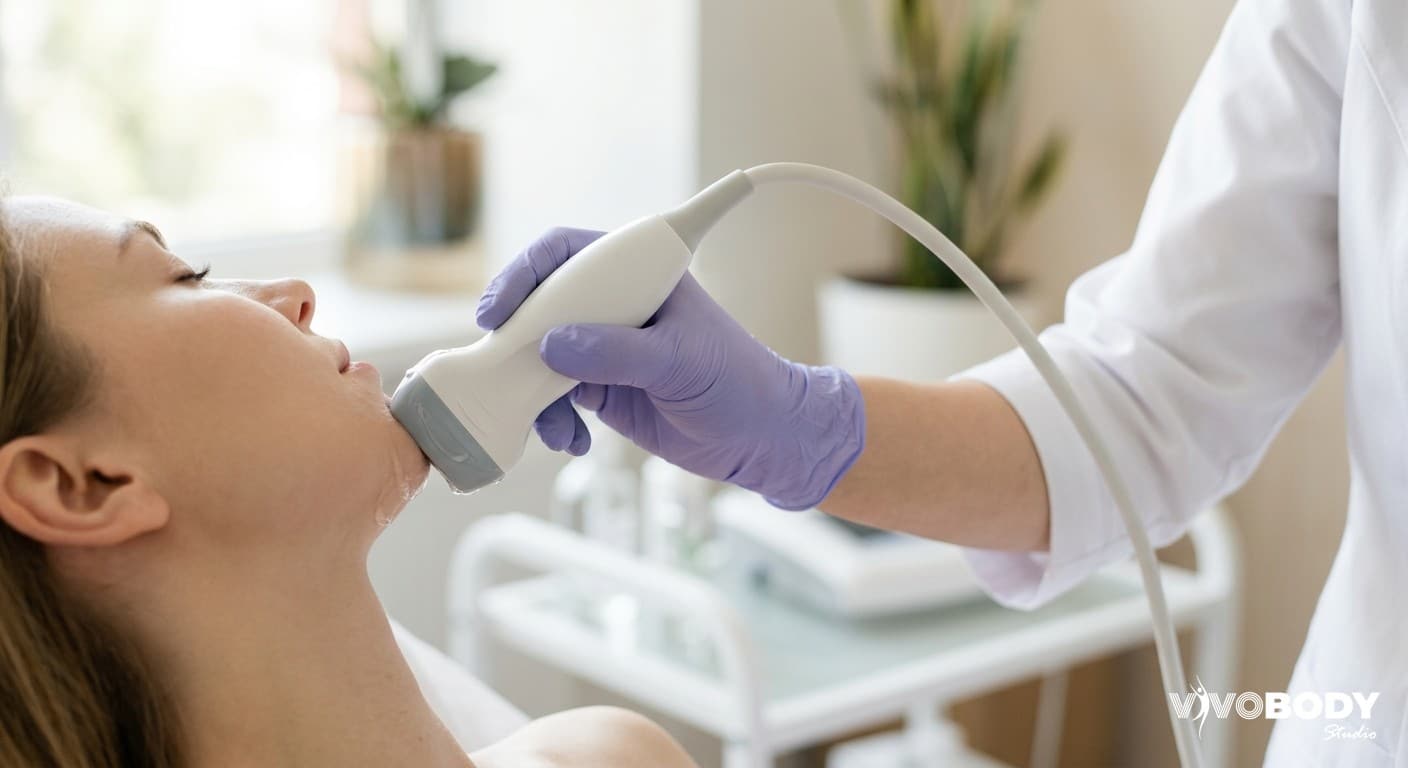
HIFU focuses ultrasound energy into tiny points roughly 1.5mm, 3.0mm and 4.5mm deep, heating these focal zones to around 60-70°C while leaving the surface of your skin completely intact. According to a body of clinical research on focused ultrasound, this creates microscopic points of thermal coagulation in the deep dermis and SMAS, biologically equivalent to thousands of minuscule, controlled injuries hidden well below the surface.
This depth is the key to HIFU’s strengths and its timeline. Because it targets the structural layers responsible for jawline definition, jowling and neck contour, rather than the superficial layers that govern fine surface texture, its results depend on the slower process of deep tissue remodelling. Our HIFU facelift and body tightening treatment uses precisely this layered approach to lift and firm without surgery or significant downtime.
The Two Phases: Immediate Tightening and Slow Remodelling
HIFU produces its effect in two distinct phases, and confusing the two is the root of most expectation problems.
Phase one: the immediate effect
Within moments of treatment, the collagen fibres caught within those focal points contract from the heat, and the surrounding tissue swells slightly. Some patients genuinely notice a subtle firmness or a fresher feel almost straight away. This is reassuring, but it is largely down to heat-induced collagen contraction and minor water retention in the tissues rather than any new structural support. It is also temporary, and rarely visible in photographs.
Phase two: neocollagenesis
The real work begins quietly in the days and weeks that follow. Your body recognises the micro-coagulation points as injuries and triggers the same wound-healing cascade it uses to repair any wound. Fibroblasts, the cells responsible for building connective tissue, are activated and begin producing fresh collagen. This generation of brand-new collagen is known as neocollagenesis, and it is the engine that drives your genuine, lasting results.
This is why the early sensation of tightening fades while the more impressive lift gradually builds. The first effect is physics; the second is biology. And biology, by its nature, takes time.
HIFU does not tighten your skin on the day of treatment. It instructs your body to rebuild its own structural support over the following months.
The Collagen Timeline, Week by Week
The wound-healing process follows a predictable, well-documented sequence. Mapping it against your appearance explains exactly why results emerge when they do.
Days 1 to 7: inflammation
You may notice mild redness, tenderness or slight swelling as the body mounts a short-lived inflammatory response. This phase recruits the cells that will go on to rebuild the tissue. Any subtle initial tightening here is from heat and fluid, not new collagen.
Weeks 2 to 4: early collagen deposition
Fibroblasts become the dominant cell in the healing zones and begin laying down type III collagen, a thin, flexible scaffold that provides initial structure but relatively little strength. This is the period when many patients worry most, because the new collagen matrix is still immature and disorganised. Most people see little visible change, and that is entirely normal.
Weeks 8 to 12: visible improvement
Around the two- to three-month mark, collagen production accelerates and the matrix begins to mature. The thinner type III collagen is progressively replaced and reinforced by stronger type I collagen. This is when most patients begin to see clearer firmness, a more defined jawline and a subtle lift. Clinically, this is where HIFU starts to shine.
Months 3 to 6: peak results
This is the window in which your results are at their best. Collagen fibres thicken, align along lines of mechanical stress and develop the cross-links that give tissue its strength. Studies of wound healing show that tissue reaches roughly 80% of its full tensile strength by around 11 to 14 weeks, which maps closely onto the clinical observation that HIFU results peak between three and six months. Our detailed guide on how long HIFU results last and when to expect them explores this trajectory further.

Managing the ‘Is It Working?’ Anxiety in Weeks 2 to 8
The hardest stretch of the HIFU journey is psychological rather than physical. The treatment is over, the mild redness has settled, and yet your reflection looks much as it did before. This is precisely the period, roughly weeks two to eight, when premature judgement causes unnecessary worry.
Research into patient satisfaction makes this striking. A cross-sectional study of women treated with micro-focused ultrasound found that around a quarter only noticed their improvement three or more months after treatment, and that satisfaction was strongly linked to how well expectations had been set beforehand. In other words, the patients who understood the timeline were far happier, regardless of when their results actually appeared.
If you are in this window, three points are worth holding onto. First, the absence of visible change is expected, not exceptional. Second, the biological work building your result is at its most active right now, even though you cannot see it. Third, the right time to assess your outcome is at three months, not at three or four weeks. Following good aftercare guidance during this period helps the natural collagen process proceed undisturbed.
Understanding the Gradual HIFU Timeline
Why Gradual Results Are a Good Thing
- Changes appear natural and subtle, with no sudden shift in appearance that others would notice immediately
- Results are built from your own collagen, supporting skin from within rather than masking it
- No surgery, incisions or general anaesthetic, and minimal downtime after treatment
- Improvements can be sustained for 12 to 18 months in many patients
- Deep targeting of the SMAS produces genuine structural lift, not just surface smoothing
What to Keep in Mind
- You must be patient, as full results take three to six months to emerge
- The first few weeks show little visible change, which can feel discouraging
- HIFU suits mild to moderate laxity and is not a replacement for a surgical facelift in advanced cases
- Results gradually soften over time as natural ageing continues, so maintenance may be wanted
- Individual response varies with age, skin quality, genetics and lifestyle
Why Some People Respond Faster Than Others
No two timelines are identical, and several factors influence both the speed and the magnitude of your response. Chronological age is significant, because younger skin generally has more robust fibroblast activity and faster collagen synthesis, often producing earlier and more pronounced results. Genetics also plays a substantial role; twin studies suggest that a large proportion of variation in skin ageing is inherited.
Lifestyle matters too. Smoking, chronic sun exposure, poor nutrition and conditions such as uncontrolled diabetes can all impair collagen production and slow the remodelling process. Conversely, diligent sun protection, a healthy diet and good general health support a more vigorous and durable response.
Skin tone need not be a barrier. Because HIFU deposits its energy deep in the tissue and does not rely on melanin as a target, it carries a low risk of post-inflammatory pigmentation. A study of patients with Fitzpatrick skin types III to VI treated with micro-focused ultrasound reported no pigmentary complications, supporting its safe use across a wide range of skin tones when performed by an experienced practitioner.
How HIFU Compares and Combines With Other Treatments
HIFU is one member of a wider family of energy-based treatments that all harness collagen biology, and understanding where it sits helps set expectations. Radiofrequency devices heat the dermis volumetrically, and our radiofrequency face lift offers an alternative route to firming. Microneedling devices such as Morpheus8 skin tightening combine fine needles with radiofrequency energy to address surface texture alongside deeper remodelling. All of these share the same fundamental timeline, because they rely on the same months-long process of neocollagenesis.
Many patients achieve the most complete rejuvenation by combining modalities. Because injectables work differently, they pair well with HIFU’s gradual structural lift. Botox anti-ageing injections soften dynamic lines within days, while HIFU rebuilds deeper support over months. If you are weighing your options, our comparisons of HIFU versus Botox and the broader landscape of non-surgical facelift options are useful starting points. For those considering the eye area specifically, our comparison of HIFU and the plasma eye lift offers an honest breakdown.
The patients who are happiest with HIFU are almost always the ones who understood the timeline before they began.
Supporting Your Results and Planning Maintenance
You can give your collagen the best possible conditions to do its work. Protecting your skin from ultraviolet radiation is the single most valuable habit, as UV exposure both degrades existing collagen and accelerates ageing. Avoiding smoking, maintaining good nutrition and managing any systemic health conditions all support fibroblast function. A topical routine featuring retinoids and antioxidants can complement HIFU at the surface, though it does not directly influence deep dermal remodelling.
Because the remodelling process continues for many months, there is no benefit to repeating HIFU too soon. Most patients with mild to moderate laxity do well with a single session, reassessed at around twelve months. Younger patients or those who respond particularly well may go eighteen months between sessions. Think of maintenance treatments not as restarting from scratch, but as topping up a reserve as the natural withdrawals of ageing continue.
Frequently Asked Questions
When will I start to see results after HIFU?
Many patients notice subtle changes within the first two to four weeks, such as a slightly firmer feel, but these early sensations come mainly from heat-induced collagen contraction and minor swelling rather than new collagen. Clearer, more consistent improvements usually emerge between eight and twelve weeks as collagen production accelerates, with the most striking lifting visible between three and six months.
Why does it take three to six months to see the full effect?
HIFU works by triggering your body’s natural wound-healing process. Early on, your body lays down thin type III collagen, which provides little strength. Over the following months this is replaced and reinforced by stronger type I collagen, which thickens, aligns and cross-links. Wound-healing studies show tissue reaches around 80% of its full strength by 11 to 14 weeks, which is why visible lifting peaks in the three to six month window.
I saw nothing at four weeks. Has my treatment failed?
Almost certainly not. At four weeks the new collagen matrix is still immature and disorganised, so visible change is often minimal even when the treatment is working perfectly. This is the normal biological pattern, and it is far too early to judge your outcome. We recommend assessing results at three months, and in some cases up to six months, rather than drawing conclusions in the early weeks.
How long do HIFU results last?
Results commonly last between 12 and 18 months. The remodelled collagen provides improved support during this time, but natural ageing, UV exposure and other factors gradually erode some of the gains. Younger patients and those with milder laxity often retain their results for longer. Many people choose a maintenance session at around 12 to 18 months to sustain the benefit.
Is HIFU safe for darker skin tones?
Yes. Because HIFU deposits its energy deep in the tissue and does not target melanin, it carries a low risk of post-inflammatory hyperpigmentation that can occur with some lasers. A study of patients with Fitzpatrick skin types III to VI reported no pigmentary complications. As always, an experienced practitioner using appropriate settings is essential, and strict sun protection afterwards is advisable.
Can HIFU replace a surgical facelift?
HIFU cannot replicate the magnitude of a surgical facelift, particularly for severe laxity or significant skin redundancy. However, for mild to moderate laxity it offers meaningful, natural-looking lifting without surgery, anaesthetic or prolonged recovery. Its gradual results suit those who prefer subtle change over a sudden shift in appearance. For advanced ageing, it is best viewed as a complementary rather than equivalent option.