Two Very Different Routes to a Lifted Face
High-intensity focused ultrasound (HIFU) and a surgical facelift sit at opposite ends of the facial rejuvenation spectrum. One is entirely non-invasive and works by stimulating your own collagen; the other is a structural operation that lifts, repositions and removes tissue. Both can make you look refreshed, but the magnitude of change, the longevity of the result, the cost and the risk involved are worlds apart.
HIFU and its micro-focused cousin Ultherapy offer subtle, gradual lifting with minimal downtime and a low complication rate. The trade-off is that the degree of improvement is limited, particularly where ageing is advanced. A modern facelift, by contrast, can dramatically rejuvenate the midface, jawline and neck for a decade or more, but at the cost of anaesthesia, weeks of recovery, scars and a small but genuine risk of serious complications.
This article offers an honest comparison so you can make an informed decision. The most important point to grasp up front is this: HIFU is not a replacement for a surgical facelift where laxity is severe. Each tool excels in its own niche, and choosing well depends far more on your anatomy and goals than on price alone.


HIFU vs Facelift at a Glance
The table below summarises the key differences. Figures are approximate and vary by region, provider and the extent of treatment.
| Factor | HIFU / Ultherapy | Surgical Facelift |
|---|---|---|
| How it works | Focused ultrasound heats the deep dermis and SMAS to stimulate collagen | Lifts and repositions deep tissue, removes excess skin |
| Invasiveness | Non-invasive, no incisions | Surgical, incisions around the ears and hairline |
| Anaesthesia | None (topical cream optional) | General anaesthesia or deep IV sedation |
| Downtime | Essentially none; mild redness for hours to days | 2–3 weeks off work and social life; full settling over months |
| Results appear | Gradually over 2–3 months | Immediate, refining over 3–6 months |
| How long results last | Around 12–18 months; maintenance needed | 10–15 years with deep-plane techniques |
| Best for | Mild-to-moderate laxity, ages 30s–early 50s | Moderate-to-severe jowling, neck laxity, deep folds |
| Typical cost (UK/USA) | From around £275; circa $1,700–$4,000 per session | $11,000+ surgeon fee; deep-plane up to $30,000–$45,000 |
| Serious risk | Rare burns, fat atrophy or nerve injury (mostly operator/device related) | Haematoma, nerve injury, skin necrosis, anaesthesia risk |
If you want to understand more about your own skin first, our guide on the science behind stubborn ageing changes and our piece on whether you are a suitable HIFU candidate are useful companions to this comparison.
Why the Face Ages and Why Lifting Procedures Exist
Facial ageing is not just about the skin. It involves the surface, the fat pads beneath, the retaining ligaments, the fascia, the muscle and even the underlying bone. With time, collagen and elastin in the dermis break down, the deep fat pads atrophy and descend, ligaments stretch, and the superficial musculoaponeurotic system — the SMAS — loosens. The result is jowling, deepened folds running from the nose to the mouth, and slackness in the neck.
This layered process explains why no single treatment can do everything. Surface treatments such as peels improve texture and pigment but cannot lift descended tissue. A facelift repositions deep structures but does not erase fine lines or sun damage. Energy-based devices like HIFU aim to bridge part of this gap by delivering controlled heat into the deep dermis and SMAS, prompting your body to lay down new collagen and tighten a little.
What a facelift actually does
A facelift, or rhytidectomy, elevates the skin, manipulates the underlying SMAS and platysma, removes or repositions fat and redrapes the skin with excess removed. Modern SMAS and deep-plane techniques are now regarded by many facial plastic surgeons as the reference standard for natural, comprehensive rejuvenation, with results that frequently last 10 to 15 years. Incisions are carefully hidden along the hairline and around the ears.
What HIFU does
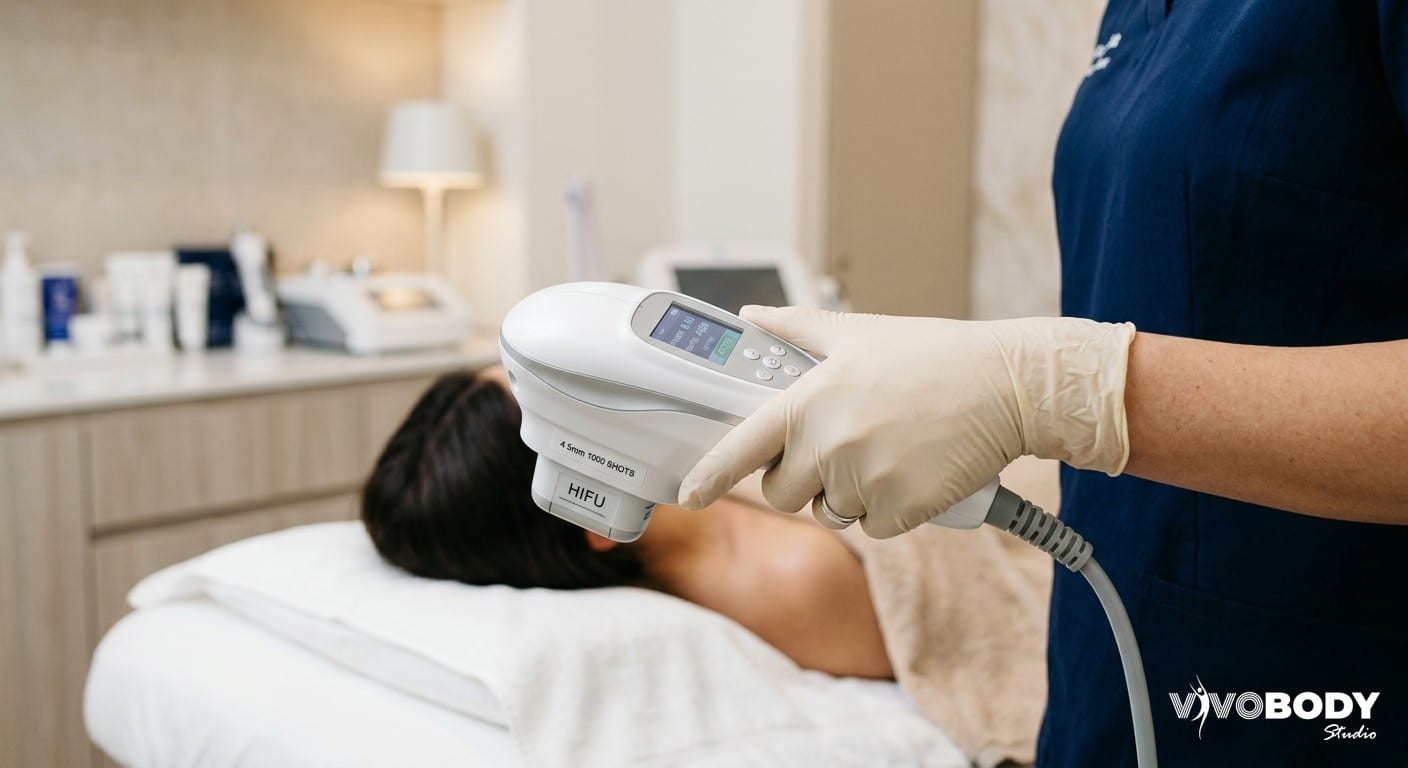
HIFU and micro-focused ultrasound deliver concentrated ultrasound energy to focal points in the deep dermis, subdermis and SMAS, raising tissue temperatures to roughly 60–70°C in tiny volumetric lesions. This causes immediate collagen contraction and a delayed wave of new collagen production. Because the beam is focused at depth, the surface of the skin is spared, which is why downtime is minimal. You can read more about how the technology evolved in our article on the history of cosmetic HIFU.
Results: What Each Treatment Can Realistically Achieve
The evidence is reasonably consistent. Multiple clinical trials and a 2024 systematic review of 45 studies show HIFU produces measurable tightening of around 18–30% in skin laxity scores, with the lower face, neck and periorbital regions responding best. Improvements typically appear over two to three months and persist for roughly a year. In one frequently cited study, 94% of patients reported improved lifting at three months.
The character of HIFU results is the key thing to understand. They are subtle, gradual and natural. Friends may notice you look fresher without being able to say why. What HIFU cannot do is remove excess skin, reposition large volumes of descended tissue, or reliably correct heavy jowls and pronounced neck bands. For mild-to-moderate laxity it is genuinely effective; for severe laxity it simply does not have the mechanism to deliver.
Surgical facelifts excel precisely where HIFU falls short. By tightening and repositioning deep tissue, they can restore a smooth jawline, eliminate jowls, sharpen the mandibular border and reconstruct a youthful neck. Long-term outcome studies report very high satisfaction: one series found 97.8% of patients rated their result as very good or beyond expectations at one year, and 68.5% still rated it highly more than 12 years later.
HIFU offers a slow, subtle lift with no downtime. A facelift offers a dramatic, durable transformation that takes weeks to recover from. Neither is better in the abstract — only better for a particular face and a particular goal.
HIFU vs Surgical Facelift: Weighing It Up
Where HIFU Wins
- No incisions, no scars and no anaesthesia required
- Virtually no downtime — back to normal life the same day
- Lower upfront cost per session
- Natural, gradual improvement that avoids an obviously ‘done’ look
- Ideal for mild-to-moderate laxity and early ageing
- Can be repeated and combined with other non-surgical treatments
Where a Facelift Wins
- Corrects moderate-to-severe jowling, neck laxity and deep folds that HIFU cannot touch
- Removes genuine excess skin rather than just tightening
- Results last 10–15 years rather than 12–18 months
- A single transformative step instead of ongoing maintenance
- The reference standard for comprehensive lower-face and neck rejuvenation
- Better long-term value per year for advanced ageing
Downtime and Recovery
The logistical contrast is stark. After HIFU you can usually resume work, exercise and social activities immediately. Mild redness, tenderness or slight swelling may linger for a few hours to a couple of days, and aftercare is limited to gentle skincare, sun protection and avoiding excessive heat for a short period. There are no sutures, dressings or wound care.
Facelift recovery is a more serious commitment. According to the American Society of Plastic Surgeons, bruising and swelling peak around days three to four, with most people moving off prescription pain relief by days four to six. By the end of the second week many feel comfortable returning to work and concealing residual bruising with makeup, though firmness, numbness and tightness can persist. The true contour emerges between weeks three and four, with final refinement continuing for three to six months as the deeper tissues settle and scars mature.
In practice, then, HIFU involves more discomfort during the session but almost none afterwards, while a facelift involves no pain during surgery but a meaningful recovery period of two to three weeks before you look socially presentable.

Cost and Long-Term Value
Per-procedure costs differ enormously. In the UK, HIFU facial tightening at some clinics starts around £275 and rises with the treatment area and device. In the United States, ultrasound skin tightening typically ranges from roughly $1,700 to $4,000 per full-face session. A surgical facelift, by contrast, carries an average surgeon’s fee of around $11,395 before anaesthesia and facility costs, and deep-plane facelift packages at specialist centres can reach $30,000 to $45,000 or more.
The picture changes once you factor in maintenance. Because HIFU results last around 12–18 months, most patients return for repeat sessions. Someone starting in their early forties and continuing for two decades might have ten to fifteen sessions, and the cumulative cost can climb into the tens of thousands. A single deep-plane facelift providing 10–15 years of structural change therefore narrows the lifetime gap considerably. When you compare cost per year of visible improvement, the difference is far smaller than the raw per-procedure figures suggest.
Crucially, neither HIFU nor a facelift is covered by insurance, as both are cosmetic. And the decision rarely turns on cost alone. Most people weigh finances alongside their tolerance for surgery, their health, their downtime constraints and whether they prefer subtle ongoing maintenance or a single decisive intervention.
Risk and Safety
HIFU has a favourable safety profile. The most common effects are transient redness, mild swelling, tingling and occasional bruising, typically resolving within days to a couple of weeks. Across large series, fewer than 5% of patients experience anything beyond these mild, temporary effects. Serious complications — burns, fat atrophy or nerve injury — are rare and are strongly associated with poor-quality devices and inexperienced operators rather than the technology itself. This makes practitioner and device selection genuinely important.
A facelift carries the risks inherent to any major surgery. Haematoma is the most common significant complication, occurring in roughly 1.8–2% of cases and sometimes requiring a return to theatre. Sensory nerve injury, most often of the great auricular nerve, can occur in up to 7% of patients, while motor nerve weakness is less common and usually temporary. Skin necrosis, infection, hair loss along incisions and scarring are all recognised, with smokers at notably higher risk. There are also the general risks of anaesthesia and a small chance of thromboembolism.
For patients with darker skin tones, HIFU has the advantage of not targeting melanin, which reduces the risk of pigmentary change when performed correctly. Facelift patients with darker skin should be counselled about a higher risk of hypertrophic and keloid scarring, making meticulous incision planning and scar management important.
Who Each Treatment Suits Best
HIFU is best suited to people in their 30s to early 50s with mild-to-moderate laxity, early jawline blurring, slight neck slackness and shallow-to-moderate wrinkles. These are patients who want a subtle but meaningful lift, are comfortable with gradual change, and value avoiding anaesthesia, scars and downtime. It also works well as part of a layered, maintenance-led approach to ageing.
A surgical facelift is the right choice when the signs of ageing exceed what energy-based devices can correct: significant jowls, marked loss of jawline definition, deep folds, redundant neck skin and visible platysma bands. These features are most common from the fifties onwards. Chronological age is less important than medical fitness; research confirms that healthy patients over 65 can undergo facelift surgery safely when operated on by board-certified surgeons.
Many people benefit from a hybrid strategy — using non-surgical treatments to maintain skin quality and delay surgery, then later to extend and refine surgical results. HIFU sits alongside other options worth exploring, and it can be helpful to compare it with alternatives such as our discussions of HIFU versus a thread lift, HIFU versus Botox and HIFU versus a plasma eye lift. You can also learn more about the treatment itself on our HIFU facelift and body tightening page.
The Bottom Line
HIFU and a surgical facelift are not competitors so much as different tools for different jobs. HIFU shines in younger patients and those with mild-to-moderate laxity who want a subtle, no-downtime lift and are happy to maintain it over time. A facelift is the right answer when structural ageing — heavy jowls, deep folds and a slack neck — has progressed beyond what any energy-based device can correct, and when you are medically fit and prepared for surgery.
The honest conclusion is that there is no one-size-fits-all answer, and HIFU is not a complete replacement for a facelift where laxity is severe. Informed decision-making means assessing your facial anatomy, degree of ageing, skin type, health and goals with a qualified practitioner, grounded in evidence rather than marketing language. If you would like to discuss whether HIFU is appropriate for your stage of ageing, a professional consultation is the best place to start.
Frequently Asked Questions
Is HIFU really a 'non-surgical facelift'?
The phrase is widely used in marketing, but it is metaphorical. HIFU can genuinely lift and tighten mild-to-moderate laxity, particularly in the jawline, lower face and neck, and improve skin texture. What it cannot do is remove excess skin, reposition large volumes of descended fat, or correct heavy jowls and pronounced neck banding. For those conditions, a surgical facelift remains the reference standard. HIFU is best thought of as a way to delay or complement surgery rather than replace it.
How long do HIFU results last compared with a facelift?
HIFU results typically last around 12 to 18 months, after which ongoing collagen breakdown and natural ageing gradually erode the gains, so most people opt for maintenance sessions roughly once a year. A modern deep-plane facelift, by contrast, commonly maintains a rejuvenated appearance for 10 to 15 years, and even traditional SMAS facelifts provide around a decade of benefit. Our dedicated guide on how long HIFU results last covers the timeline in more detail.
How painful are HIFU and a facelift?
HIFU produces brief sensations of heat, tingling or ‘pinpricks’ during treatment, usually rated around the middle of a 10-point pain scale, with little discomfort afterwards. Topical anaesthetic and adjusting the energy settings can improve comfort. A facelift is performed under general anaesthesia or deep sedation, so you feel nothing during surgery, but postoperative pain is moderate for the first 24 to 48 hours and tightness can linger for several weeks.
Can HIFU and a facelift be combined?
Yes, and increasingly this is considered best practice rather than choosing one in isolation. Many people use HIFU and other non-surgical treatments in their 30s and 40s to maintain skin quality, consider surgery when warranted, then return to non-surgical maintenance afterwards to extend and refine their results. This continuum-of-care approach reflects the reality that facial ageing is continuous and multifactorial.
How important is the choice of clinic and device for HIFU?
Very important. Properly performed HIFU is safe, but the rare serious adverse events — burns, fat atrophy and nerve injury — are almost always linked to low-quality devices or inexperienced operators. Ask about the specific device used, the practitioner’s training and credentials, and whether there is medical oversight. This scrutiny is just as relevant to non-surgical treatment as choosing the right surgeon is to a facelift.
Which offers better value for money?
It depends on your starting point. For mild-to-moderate ageing, HIFU offers good value with minimal disruption. For advanced laxity, repeated HIFU may never deliver the result you want, so a single facelift represents better value per year of improvement despite the higher upfront cost. When maintenance over two decades is factored in, the lifetime cost gap between the two narrows considerably.